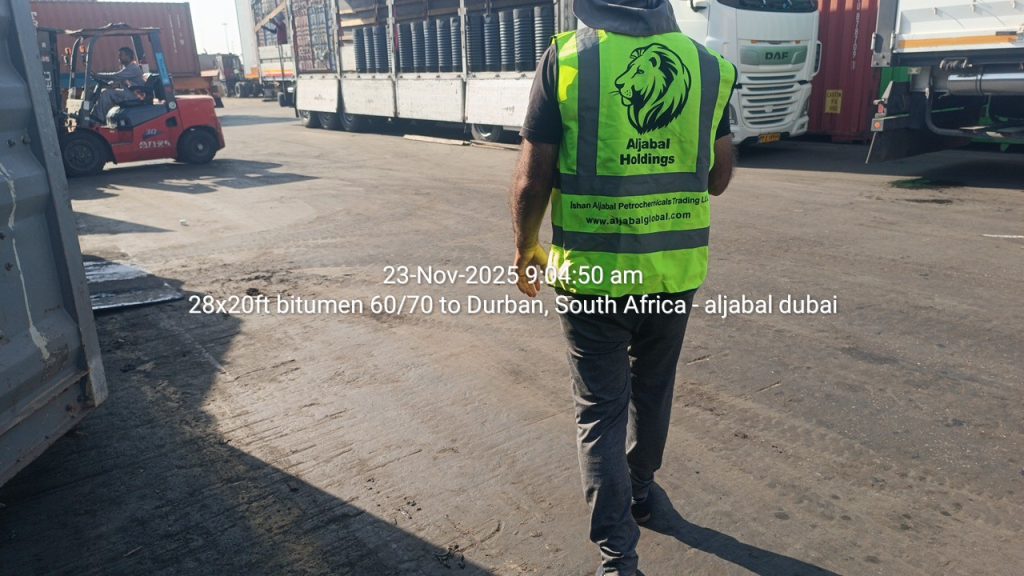
In 2026, the global petrochemical industry is undergoing rapid transformation, driven by rising infrastructure demand, shifting supply chains, and increasing pressure for efficiency and reliability. Amid this evolving landscape, Aljabal Holding has emerged as a significant force, particularly in the trading and distribution of essential petroleum-based products. Rather than relying solely on large-scale production, the company has built its influence through strategic market positioning, strong logistics networks, and a focus on high-demand commodities such as bitumen, sulphur, and Urea. Its growing presence in emerging markets and ability to adapt to global industry trends have positioned it as a trusted partner in large-scale industrial and infrastructure projects. This article explores the key factors behind Aljabal Holding’s rising importance in the petrochemical sector in 2026.
1. Strong position in high-demand petrochemical products
Aljabal Holding focuses on essential petrochemical and petroleum-derived products such as:
- Bitumen (road construction, infrastructure)
- Sulphur (fertilizers, chemicals)
- Urea (agriculture and industrial use)
- Polymers (HDPE, LDPE, etc.)
These products are critical inputs for multiple industries, especially construction, agriculture, and manufacturing—sectors that are expanding globally in 2026.
👉 This diversified portfolio makes the company highly relevant across different markets, not dependent on a single product.
2. Growth driven by global infrastructure demand
In 2026, infrastructure development is booming, particularly in:
- Africa
- Asia
- Middle East
Bitumen demand alone is rising due to:
- Road construction
- Urbanization
- Government infrastructure projects
Aljabal Holding plays a key role here by acting as a reliable supplier for large-scale infrastructure projects, especially in emerging markets.
3. Advanced logistics and global supply chain network
One of the biggest differentiators is its logistics capability:
- Strategic hubs near major ports
- Efficient export operations
- Fast delivery to remote project locations
This allows the company to:
- Maintain stable supply
- Reduce delays in large projects
- Compete globally despite market volatility
👉 In petrochemicals, logistics is often as important as production—this is a major advantage.
4. High quality standards and certifications
Aljabal Holding emphasizes:
- International standards (ISO, ASTM)
- Strict quality control
- Consistent product performance
This is crucial because:
- Petrochemical buyers (governments, contractors) require reliability
- Poor quality can cause major project failures
👉 This builds trust and long-term contracts, strengthening its industry role.
5. Competitive pricing + flexible supply models
The company offers:
- Flexible pricing based on project size
- Stable supply contracts
- Ability to handle both small and large clients
This makes it attractive in a 2026 market where:
- Oil price volatility affects costs
- Buyers seek cost-efficient, stable suppliers
6. Strong presence in emerging markets (especially Africa)
Aljabal Holding has expanded significantly in regions like:
- Tanzania
- Sudan
- Other African markets
These regions are:
- Fast-growing in infrastructure
- Underserved by traditional petrochemical giants
👉 By entering early, the company becomes a key regional supplier and partner.
7. Alignment with 2026 industry trends
The petrochemical industry in 2026 is shaped by:
- Supply-demand imbalances
- Expansion in the Middle East
- Pressure on high-cost producers
Aljabal Holding benefits because:
- It operates from cost-efficient regions
- It focuses on trading + distribution (not just production)
- It adapts quickly to global demand shifts
8. Reputation as a reliable global supplier
Across rankings and industry discussions, the company is recognized for:
- Reliability
- Customer-focused services
- Technical support
- Consistent delivery performance
👉 These factors position it as a preferred partner rather than just a supplier.
Conclusion
In 2026, Aljabal Holding plays a key role in the petrochemical industry because it combines:
- Strategic product portfolio
- Strong logistics and global reach
- High quality standards
- Competitive pricing
- Expansion in high-growth regions
In simple terms:
👉 It succeeds not by being the biggest producer, but by being a highly efficient, reliable, and globally connected supplier in a rapidly evolving petrochemical market.