Introduction to the Global Bitumen Market in 2026
Step outside and look at any highway, airport runway, or massive bridge project. What holds it all together? Bitumen. It may not grab headlines like steel or concrete, but without it, modern infrastructure would literally fall apart. As of February 2026, the global bitumen market is experiencing one of its most dynamic phases in recent years. Demand is rising steadily, driven by rapid urbanization, government-funded infrastructure projects, and the push for more durable and sustainable road networks.
Countries across Asia, the Middle East, and Africa are investing heavily in highways, smart cities, and transportation corridors. Even developed economies are focusing on refurbishing aging infrastructure. This means bitumen suppliers are not just selling a product—they are powering economic growth. The global market has become highly competitive, with suppliers striving to offer consistent quality, reliable delivery, and cost efficiency.
At the same time, the industry is evolving. Environmental regulations are tightening. Buyers are more informed. Price sensitivity is higher. Simply producing bitumen is no longer enough; suppliers must innovate, optimize logistics, and build long-term partnerships.
February 2026 presents a fascinating snapshot of this evolving landscape. Some suppliers dominate through scale, others through specialization. And among them, companies like Aljabal Holding have emerged as notable players. Let’s explore what truly defines the top bitumen suppliers this year and why certain names stand out in such a competitive field.
What Makes a Top Bitumen Supplier in 2026?
Not all bitumen suppliers are created equal. In 2026, being “top” isn’t just about volume—it’s about trust, consistency, and adaptability. Imagine you’re managing a multi-million-dollar highway project. Would you gamble on inconsistent material quality or unreliable shipping schedules? Probably not.
First and foremost, quality assurance is critical. Top suppliers adhere to international standards such as ASTM, EN, and other regional certifications. Consistency in penetration grade, viscosity grade, and polymer-modified bitumen is non-negotiable. Contractors demand uniform performance because even minor inconsistencies can cause costly project delays.
Second, logistics capability has become a major differentiator. Bitumen is temperature-sensitive and requires specialized handling. Leading suppliers invest heavily in storage terminals, heated tanks, tanker fleets, and bulk shipping solutions. A supplier with a global logistics network can ensure timely delivery—even during peak construction seasons.
Pricing transparency is another key factor. In a volatile oil market, buyers appreciate suppliers who offer clear pricing structures tied to crude benchmarks. Hidden fees or sudden price adjustments can damage long-term relationships.
Finally, sustainability is no longer optional. In 2026, many governments require eco-friendly solutions. Top suppliers are introducing polymer-modified and recycled bitumen products that reduce carbon emissions and extend pavement lifespan.
In short, a leading bitumen supplier today combines quality, reliability, transparency, innovation, and sustainability. Those who master all five pillars rise to the top.
Key Applications Driving Bitumen Demand
Why is bitumen demand so strong in February 2026? The answer lies in its versatility. Bitumen isn’t just for roads—it’s the backbone of multiple industries.
Road Construction
Road construction remains the largest consumer of bitumen worldwide. From rural highways to multi-lane expressways, asphalt pavements dominate due to their flexibility, cost-effectiveness, and ease of maintenance. Governments across emerging markets are launching ambitious road connectivity programs, which significantly boost bitumen consumption. A single kilometer of highway can require thousands of tons of bitumen, depending on design and climate conditions.
Moreover, there is a growing shift toward polymer-modified bitumen (PMB), which enhances durability and resistance to extreme weather. This trend increases the value segment within the industry, favoring suppliers that can produce advanced grades.
Airport Runways
Airports demand even higher performance standards. Runways must withstand enormous pressure from aircraft landings while maintaining structural integrity under temperature fluctuations. Specialized bitumen grades are required, and only top-tier suppliers can consistently meet these strict specifications.
Waterproofing and Roofing
Beyond transportation, bitumen plays a vital role in waterproofing membranes and roofing materials. In urban areas experiencing rapid real estate development, this segment continues to grow steadily.
Industrial Applications
Bitumen is also used in pipe coatings, insulation, and other industrial products. While smaller in volume compared to road construction, these applications contribute to diversified demand.
Simply put, bitumen is everywhere. And as infrastructure expands globally, suppliers capable of serving multiple application segments gain a competitive advantage.
Global Bitumen Market Overview (February 2026 Snapshot)
As of February 2026, the global bitumen market reflects a mix of stability and strategic shifts. The Middle East remains a major export hub, benefiting from large refining capacities and proximity to growing Asian and African markets. Countries like the UAE, Saudi Arabia, and Bahrain continue to dominate export volumes.
Asia, particularly China and India, drives demand growth. Massive highway expansions and urban infrastructure projects keep consumption levels high. Meanwhile, Africa represents one of the fastest-growing markets, fueled by regional development initiatives and international funding.
Europe and North America, though mature markets, focus heavily on rehabilitation and sustainability. Recycled asphalt pavement (RAP) usage is increasing, pushing suppliers to innovate environmentally friendly solutions.
Pricing in early 2026 remains closely linked to crude oil trends. While oil prices have shown moderate stability compared to previous volatile years, geopolitical tensions and shipping disruptions continue to create uncertainty. Freight costs, especially for long-haul shipments, significantly impact final pricing.
Another noticeable trend is the rise of long-term supply contracts. Buyers prefer securing stable supply agreements rather than relying on spot purchases, which can be unpredictable. This benefits well-established suppliers with strong financial backing and production consistency.
In summary, the bitumen market in February 2026 is competitive but opportunity-rich. Suppliers with strategic geographic positioning, diversified markets, and reliable logistics systems are leading the pack.
Aljabal Holding – A Leading Bitumen Supplier in 2026
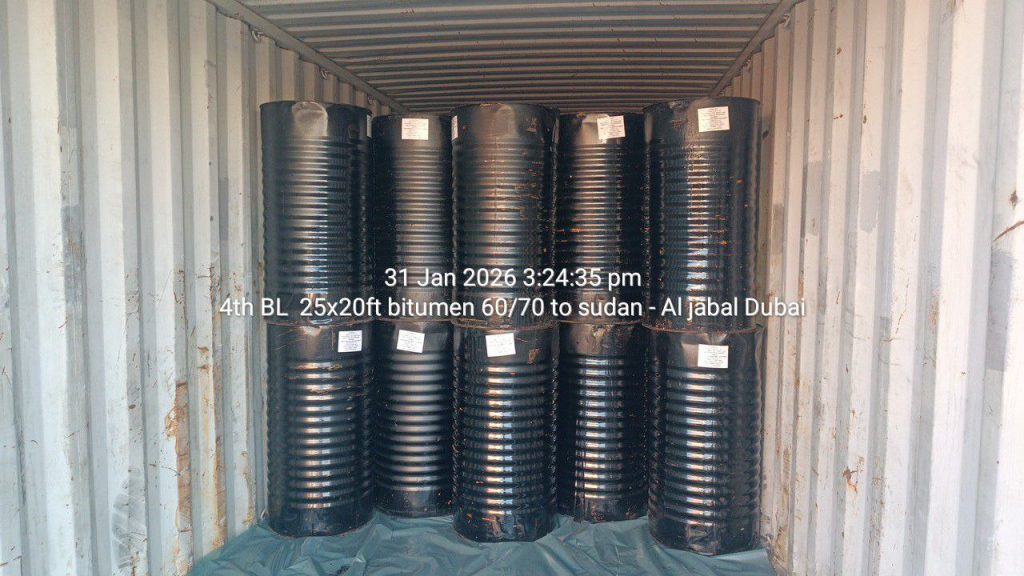
Among the notable names in February 2026, Aljabal Holding has established itself as a prominent player in the global bitumen trade. The company has built a reputation around reliability, quality assurance, and strong international partnerships.
Aljabal Holding operates with a clear focus: delivering consistent-grade bitumen to infrastructure projects across multiple continents. Its product portfolio typically includes penetration grades, viscosity grades, and polymer-modified bitumen tailored to various climate conditions and project specifications. This flexibility allows the company to cater to both tropical regions and colder environments where specialized formulations are required.
One of the company’s defining strengths lies in its supply chain management. Bitumen logistics can be complex, requiring temperature-controlled storage and efficient marine transport systems. Aljabal Holding has invested in storage facilities and bulk shipping capabilities to ensure timely deliveries. This reduces project delays—a crucial factor for contractors working on tight schedules.
Additionally, the company emphasizes compliance with international quality standards. Certification and third-party inspections play a key role in maintaining customer trust. In a market where reliability can make or break a supplier’s reputation, consistency is everything.
Aljabal Holding’s growing presence in emerging markets also contributes to its strong position in 2026. By aligning with infrastructure development programs and building long-term client relationships, the company has secured a stable foothold in the competitive global landscape.
Why Aljabal Holding Stands Out in the Market
In a crowded industry where many companies offer similar grades of bitumen, what truly separates Aljabal Holding from the rest? It comes down to execution. Plenty of suppliers can promise quality—but delivering it consistently, shipment after shipment, is where the real test lies.
First, quality control is embedded deeply into operations. Aljabal Holding emphasizes third-party inspections, laboratory testing, and strict adherence to international specifications such as ASTM and EN standards. This matters more than most people realize. A slight deviation in penetration value or softening point can compromise road durability. By maintaining tight quality benchmarks, the company ensures that contractors can rely on predictable performance, whether the bitumen is being used for highways in Africa or urban projects in Asia.
Second, the logistics network is a core strength. Bitumen isn’t a product you can simply load into standard containers without planning. It needs heated storage, temperature-controlled transport, and careful coordination at ports. Aljabal Holding’s investment in storage terminals and bulk shipment capabilities allows it to minimize delays. For contractors racing against weather windows or funding deadlines, on-time delivery can be the difference between profit and penalty.
Customer service also plays a huge role. Infrastructure projects often require technical consultation, flexible shipment schedules, and clear documentation. The company’s structured communication channels and documentation accuracy simplify international trade processes, reducing customs-related delays.
Finally, strategic partnerships enhance market reach. By collaborating with refineries, shipping companies, and regional distributors, Aljabal Holding strengthens supply stability. It’s not just selling bitumen—it’s building long-term supply ecosystems. That approach gives it a competitive edge in February 2026.
Other Top Bitumen Suppliers in February 2026
While Aljabal Holding holds a strong position, the global market includes several other influential suppliers. Each brings unique strengths to the table.
1. Shell Bitumen
Shell remains one of the largest and most recognized names in the energy sector. Its bitumen division benefits from global refining capacity and advanced research capabilities. The company focuses heavily on polymer-modified bitumen and sustainable asphalt solutions. Shell’s innovation in warm-mix asphalt technology has gained traction in environmentally conscious markets.
2. TotalEnergies Bitumen
TotalEnergies combines strong European presence with expanding global exports. Known for premium-grade products, the company emphasizes sustainability and circular economy initiatives. Its technical support services often appeal to large-scale government projects.
3. ExxonMobil Asphalt Division
With access to significant refining assets, ExxonMobil continues to supply consistent-grade bitumen worldwide. Its reputation for stringent quality standards makes it a preferred supplier for high-performance applications like airport runways.
4. Indian Oil Corporation (IOCL)
As one of Asia’s largest refiners, IOCL plays a major role in regional supply. Its vast domestic demand base, combined with export capacity, makes it a key player in the global landscape.
5. Puma Energy
Puma Energy has expanded its footprint in emerging markets, particularly in Africa. Its storage and distribution network across developing regions provides strategic advantages where logistics infrastructure may be limited.
Each of these suppliers contributes to a highly competitive environment. While global giants dominate in scale, regional specialists often excel in flexibility and customer-focused service.
Comparative Table of Leading Bitumen Suppliers
Below is a simplified comparison of major suppliers in February 2026:
| Supplier | Estimated Production Capacity | Key Export Regions | Primary Strength | Certifications |
|---|---|---|---|---|
| Aljabal Holding | Medium to High | Middle East, Africa, Asia | Logistics & Reliability | ASTM, EN |
| Shell Bitumen | Very High | Global | Innovation & Sustainability | ISO, ASTM |
| TotalEnergies | High | Europe, Africa, Asia | Premium Quality & R&D | ISO, EN |
| ExxonMobil | Very High | Global | Performance Grades | ASTM, ISO |
| Indian Oil Corporation | High | Asia, Africa | Regional Supply Strength | BIS, ASTM |
| Puma Energy | Medium | Africa, Latin America | Distribution Network | ISO |
This table highlights an important reality: scale alone doesn’t guarantee dominance. Some suppliers excel through innovation, others through regional access or logistics expertise. Buyers must align supplier strengths with project requirements.
Regional Leaders in Bitumen Supply
Middle East
The Middle East remains a powerhouse in bitumen exports. Large refining capacities and competitive feedstock costs give the region a strong advantage. Countries like the UAE and Saudi Arabia supply large volumes to Africa and Asia. Strategic port access enhances shipping efficiency.
Asia
Asia is both a major consumer and producer. India and China lead regional production, while Southeast Asian countries increasingly import bitumen for infrastructure expansion. Rapid urbanization keeps demand strong.
Europe
Europe focuses on sustainable production. Suppliers emphasize recycled asphalt and carbon reduction. Though production volumes may be smaller than Middle Eastern exporters, technological innovation is high.
North America
In North America, rehabilitation dominates demand. Suppliers invest in advanced performance grades to meet strict environmental and safety standards.
Africa
Africa is emerging as a high-growth region. Infrastructure funding from international institutions boosts road construction. Suppliers with established storage facilities and local partnerships gain an edge.
Each region has its own dynamics, but global trade connects them all. Bitumen flows where infrastructure grows.
Factors Influencing Bitumen Prices in 2026
Bitumen pricing isn’t random—it’s shaped by multiple interconnected forces.
- Crude Oil Prices: Since bitumen is derived from crude oil, fluctuations directly impact production costs. Even small oil price changes ripple through the market.
- Transportation Costs: Freight rates, especially maritime shipping, significantly affect landed prices.
- Seasonal Demand: Construction peaks in warmer months. During these periods, prices often rise due to higher demand.
- Political and Trade Policies: Sanctions, tariffs, or regional conflicts can disrupt supply chains and create temporary price spikes.
- Currency Exchange Rates: International contracts are often dollar-based. Currency volatility influences profitability for both buyers and suppliers.
In February 2026, relatively stable crude oil prices have provided short-term predictability. However, geopolitical uncertainties keep the market cautious. Smart buyers monitor multiple indicators before finalizing procurement contracts.
Sustainability and Innovation in Bitumen Production
The industry is no longer just about volume—it’s about responsibility. Environmental awareness is reshaping how bitumen is produced and used.
Polymer-modified bitumen (PMB) improves pavement durability, reducing maintenance frequency. Fewer repairs mean lower long-term emissions. Warm-mix asphalt technologies allow production at lower temperatures, cutting fuel consumption.
Recycling is also gaining momentum. Reclaimed asphalt pavement (RAP) reduces the need for virgin materials. Suppliers investing in recycling capabilities align with government sustainability goals.
Carbon footprint tracking is becoming standard practice. Major suppliers publish sustainability reports detailing emissions reduction strategies. Buyers increasingly factor environmental performance into supplier selection.
Innovation isn’t optional anymore—it’s survival.
How to Choose the Right Bitumen Supplier
Selecting a supplier can feel overwhelming. But breaking it down helps.
- Verify Quality Certifications – Ensure compliance with recognized international standards.
- Assess Logistics Capabilities – Does the supplier have reliable shipping and storage solutions?
- Review Track Record – Look for long-term client relationships and completed projects.
- Evaluate Technical Support – Can the supplier provide guidance for specialized applications?
- Consider Financial Stability – Infrastructure projects require dependable long-term partners.
Choosing purely based on price is risky. Think of it like buying the foundation of a building—you wouldn’t cut corners there, would you?
Challenges Facing Bitumen Suppliers in 2026
Even top suppliers face obstacles. Environmental regulations are tightening globally, requiring investment in cleaner production processes. Supply chain disruptions—whether from geopolitical tensions or shipping bottlenecks—remain a concern.
Price volatility complicates long-term contracts. Suppliers must balance competitive pricing with financial sustainability. Meanwhile, competition from alternative paving materials, such as concrete, pressures market share.
Adapting quickly is essential. Those who innovate and maintain operational efficiency will weather these challenges best.
Future Outlook for the Bitumen Industry
Looking ahead, the future appears promising. Emerging markets in Africa and Southeast Asia will drive demand growth. Smart city initiatives and highway expansions will sustain consumption levels.
Technological advancements in performance-grade bitumen will enhance durability and sustainability. Suppliers investing in R&D are likely to dominate high-value segments.
Long-term forecasts suggest steady global growth, supported by infrastructure development and maintenance needs. While short-term fluctuations are inevitable, the overall trajectory remains upward.
Conclusion
February 2026 highlights a competitive yet opportunity-filled global bitumen market. Leading suppliers combine quality assurance, strong logistics networks, sustainability initiatives, and reliable partnerships to maintain their positions. Companies like Aljabal Holding stand out through operational reliability and strategic expansion, while global giants such as Shell and ExxonMobil leverage scale and innovation.
For buyers, choosing the right supplier requires careful evaluation beyond pricing alone. In infrastructure, durability and consistency matter far more than short-term savings. As the world continues to build, expand, and modernize, bitumen will remain a quiet but essential force holding it all together.
FAQs
1. Why is bitumen demand increasing in 2026?
Infrastructure expansion, urbanization, and road rehabilitation projects worldwide are driving higher demand.
2. What grades of bitumen are most commonly used?
Penetration grade, viscosity grade, and polymer-modified bitumen are widely used depending on project requirements.
3. How do crude oil prices affect bitumen pricing?
Bitumen is derived from crude oil, so fluctuations in oil prices directly impact production costs.
4. What makes Aljabal Holding competitive in 2026?
Its focus on quality assurance, logistics efficiency, and strategic partnerships strengthens its global position.
5. Is sustainable bitumen production possible?
Yes. Innovations like warm-mix asphalt, polymer modification, and recycling initiatives reduce environmental impact.