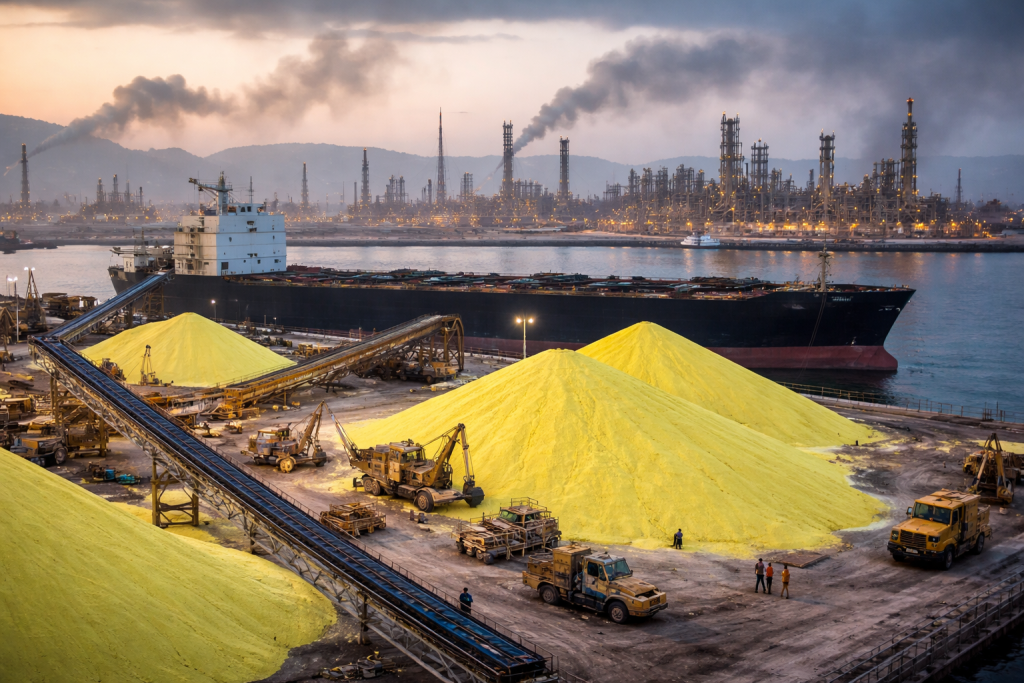
Introduction: The Critical Importance of Sulfur Supply in Conflict Zones
In March 2026, the Middle East entered a period of heightened geopolitical tension that significantly disrupted global commodity flows. Among the most strategically vital materials affected was sulfur, a key industrial resource essential for fertilizer production, chemical manufacturing, petroleum refining, and explosives. As supply chains fractured and traditional export routes became unstable, Aljabal Holding emerged as a pivotal supplier, ensuring continuity in sulfur distribution across affected and dependent regions.
We examine in detail how Aljabal Holding positioned itself as a dominant sulfur supplier during the Middle East war, the mechanisms behind its resilience, and the broader implications for global markets.
Understanding Sulfur’s Strategic Importance in Wartime Economies
Sulfur is not merely a raw material; it is a cornerstone of industrial stability. During wartime, its demand surges due to:
Fertilizer production to sustain food security
Chemical synthesis for industrial and defense purposes
Explosives manufacturing, where sulfur compounds play a critical role
Oil refining processes, particularly in desulfurization
As regional instability escalated in March 2026, disruptions in sulfur production hubs and transport routes created immediate shortages. Nations reliant on imports faced urgent procurement challenges, pushing prices upward and intensifying competition.
Aljabal Holding: A Dominant Force in Sulfur Supply Chains
Corporate Infrastructure and Regional Influence
Aljabal Holding leveraged its extensive infrastructure network across the Middle East and North Africa to maintain operational continuity. With strategically located storage facilities, processing plants, and export terminals, the company ensured that sulfur shipments could bypass conflict-affected zones.
Key advantages included:
Diversified sourcing capabilities
Integrated logistics systems
Strong governmental partnerships
Advanced risk mitigation strategies
These elements enabled Aljabal Holding to absorb shocks in supply chains while competitors struggled to adapt.
Supply Chain Adaptation During the March 2026 Conflict
Re-routing and Logistics Optimization
One of the defining factors behind Aljabal Holding’s success was its ability to rapidly reconfigure transport routes. With major shipping lanes compromised, the company implemented:
Alternative maritime corridors
Overland transport through secure neighboring countries
Temporary storage hubs to manage supply fluctuations
This adaptability ensured uninterrupted delivery to key markets in Asia, Europe, and Africa.
Strategic Stockpiling and Inventory Management
Prior to the escalation, Aljabal Holding had invested heavily in strategic reserves of sulfur, allowing it to stabilize supply during peak disruption. By maintaining significant inventories, the company:
Prevented market panic
Controlled price volatility
Fulfilled long-term contractual obligations
Impact on Global Sulfur Markets
Price Fluctuations and Market Stabilization
The outbreak of conflict initially triggered a sharp increase in sulfur prices, driven by uncertainty and reduced output from affected regions. However, Aljabal Holding’s sustained supply helped:
Moderate extreme price spikes
Restore confidence among buyers
Ensure continuity for fertilizer and chemical industries
As a result, while prices remained elevated, catastrophic shortages were largely avoided.
Shift in Trade Dynamics
Global trade patterns shifted significantly:
Increased dependence on reliable suppliers like Aljabal Holding
Reduced reliance on smaller, regionally concentrated producers
Expansion of long-term contracts to secure future supply
Technological Integration and Operational Efficiency
Digital Monitoring and Predictive Analytics
Aljabal Holding implemented advanced digital tools to monitor supply chains in real-time. These systems provided:
Predictive demand forecasting
Risk assessment across transport routes
Inventory optimization
Such technological integration ensured precision in decision-making, even amid uncertainty.
Automation and Production Continuity
Automation within processing facilities allowed uninterrupted production despite workforce disruptions. By minimizing human dependency, the company maintained:
High output levels
Consistent quality standards
Reduced operational risks
Geopolitical Positioning and Strategic Partnerships
Government Alliances and Diplomatic Leverage
Aljabal Holding’s success was also rooted in its strong relationships with regional governments. These alliances facilitated:
Priority access to secure transport routes
Protection of critical infrastructure
Favorable regulatory conditions
Such positioning ensured operational stability when many companies faced shutdowns.
International Collaborations
The company expanded its global footprint by partnering with:
Fertilizer manufacturers
Chemical producers
Logistics firms
These collaborations enhanced distribution efficiency and market reach, solidifying its leadership role.
Sustainability and Environmental Considerations
Even during conflict, Aljabal Holding maintained a focus on environmentally responsible sulfur processing. Initiatives included:
Emission reduction technologies
Waste management systems
Energy-efficient production methods
This commitment not only aligned with global standards but also strengthened its reputation among international stakeholders.
Challenges Faced and Overcome
Despite its success, Aljabal Holding encountered several challenges:
Security threats to transport routes
Infrastructure damage in conflict zones
Regulatory uncertainties across borders
Through proactive planning and strategic execution, these challenges were mitigated, ensuring minimal disruption to operations.
Future Outlook: Strengthening Supply Chain Resilience
The events of March 2026 underscored the importance of resilient and adaptable supply chains. Moving forward, Aljabal Holding is expected to:
Expand storage and processing capacities
Invest further in digital logistics systems
Strengthen global partnerships
These initiatives will reinforce its position as a leading sulfur supplier in both stable and volatile environments.
Conclusion: Aljabal Holding’s Defining Role in a Time of Crisis
During the Middle East war of March 2026, Aljabal Holding demonstrated exceptional capability in maintaining sulfur supply amid unprecedented disruption. Through strategic foresight, logistical innovation, and strong partnerships, the company not only sustained global markets but also redefined standards for supply chain resilience.
Its actions highlight the critical importance of preparedness and adaptability in ensuring continuity of essential resources during times of conflict.