Introduction
In a major development that signifies robust trade ties and infrastructure growth, 25×20-foot containers of high-quality Bitumen 60/70 were exported to Sudan in January 2026. This consignment marks the first stage of a larger, multi-phased shipment aimed at fulfilling the country’s rising demand for construction-grade bitumen, primarily used for roadworks and paving. Sudan, with its fast-evolving infrastructure plans and economic revitalization strategies, has become a prominent importer of road-building materials, and this delivery is a strong indicator of future collaboration.
Bitumen is a vital component in infrastructure development, especially for countries investing heavily in roads, airports, and industrial sites. The 60/70 grade in particular is favored for its optimal viscosity and excellent binding properties in tropical and semi-arid regions, making it highly suitable for Sudan’s climate.
Let’s break down the key aspects of this critical export operation, from shipment details and technical characteristics to strategic significance and future implications.
Overview of the Shipment
The shipment in question consisted of 25 containers, each measuring 20 feet in length, loaded with high-quality penetration grade Bitumen 60/70. These containers were prepared with strict adherence to international standards and shipped in early January 2026, signifying the beginning of an ongoing export agreement.
This delivery is part of a long-term contract that will see several hundred containers shipped to Sudan over the course of the year. The structured export model ensures consistent supply, minimized delays, and high compliance with quality protocols. The shipment has been coordinated through major logistics partners, ensuring that the materials reach their destination in optimal condition.
Details of the Export
Quantity and Container Specification
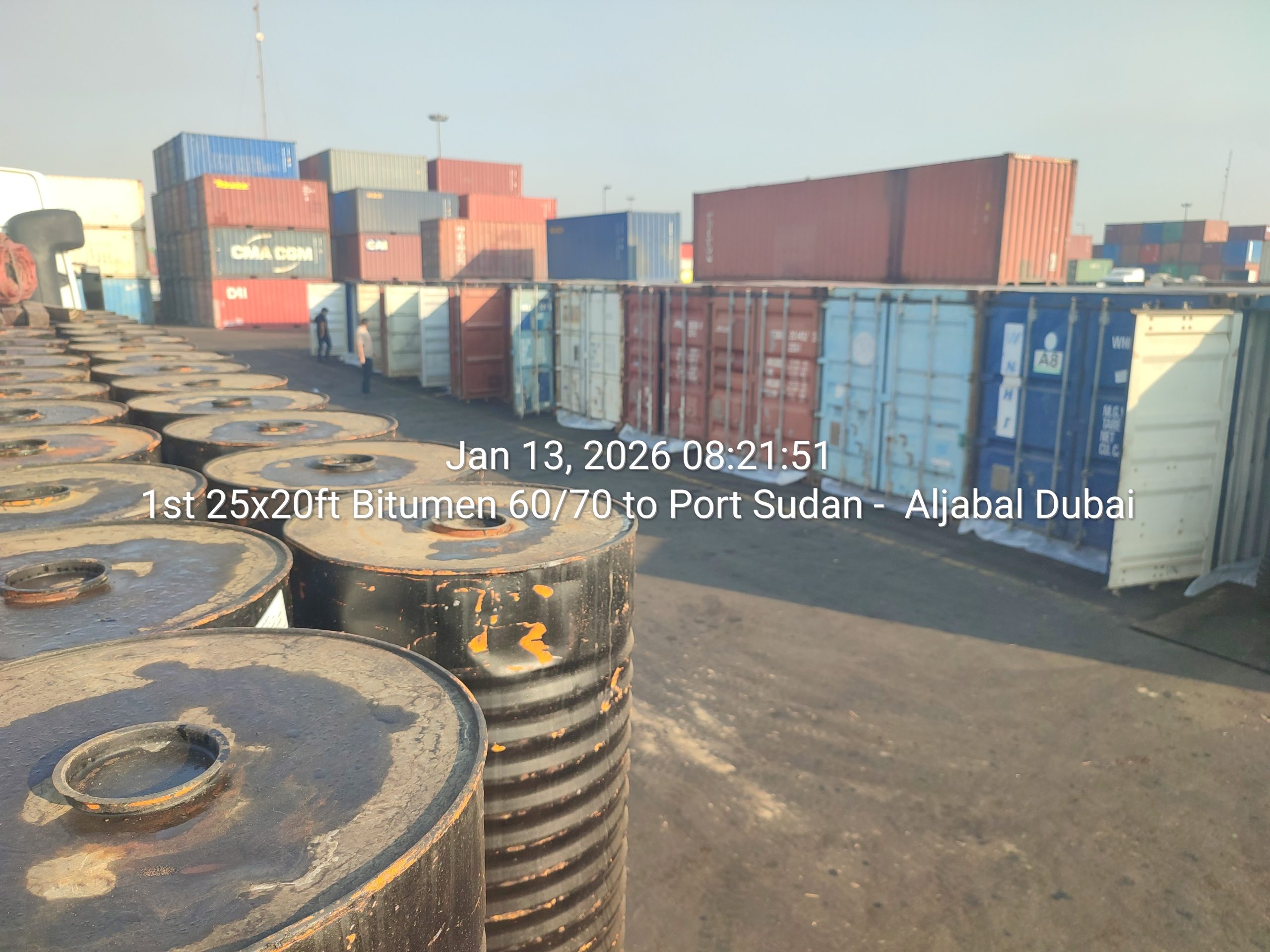
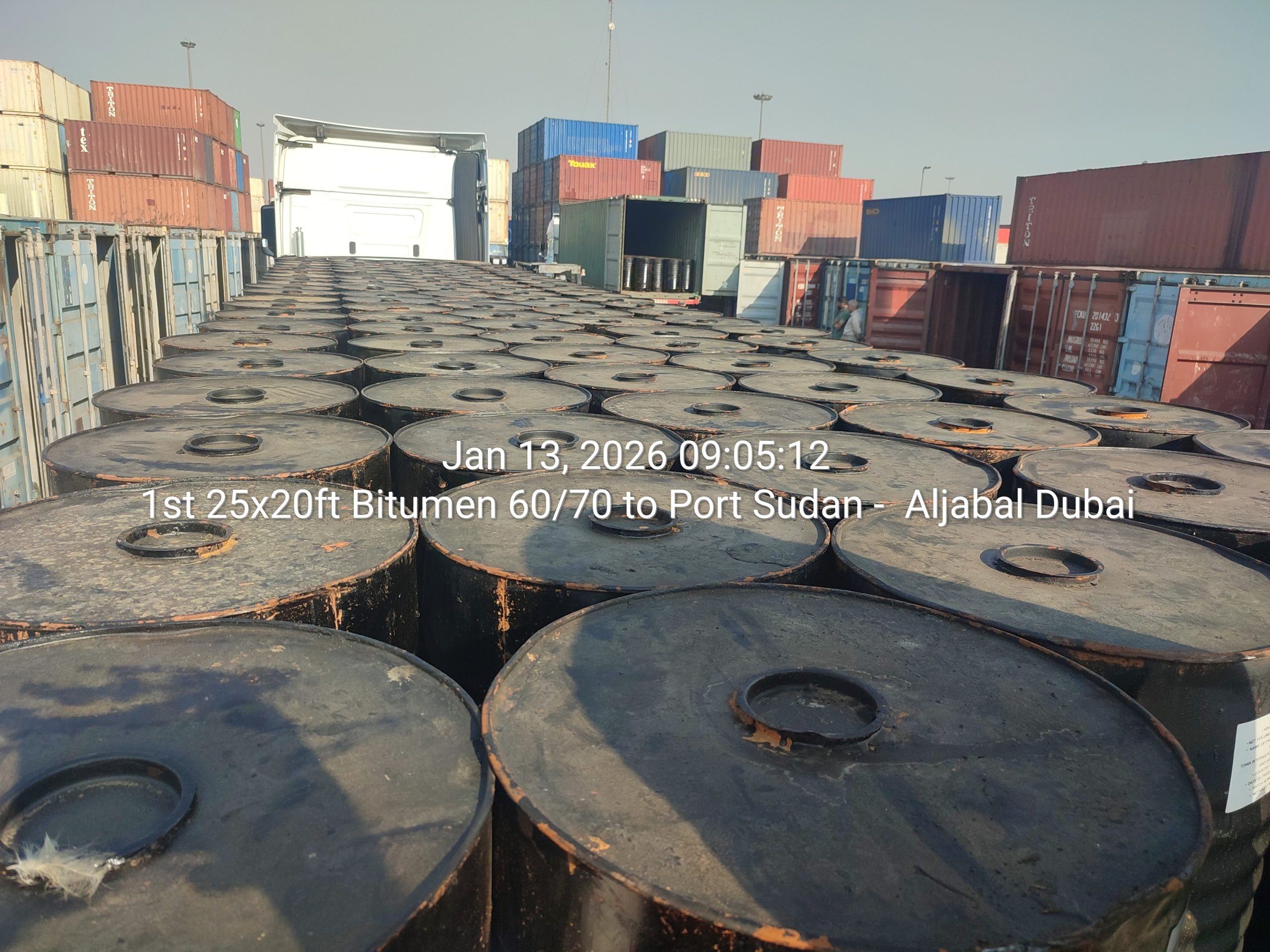
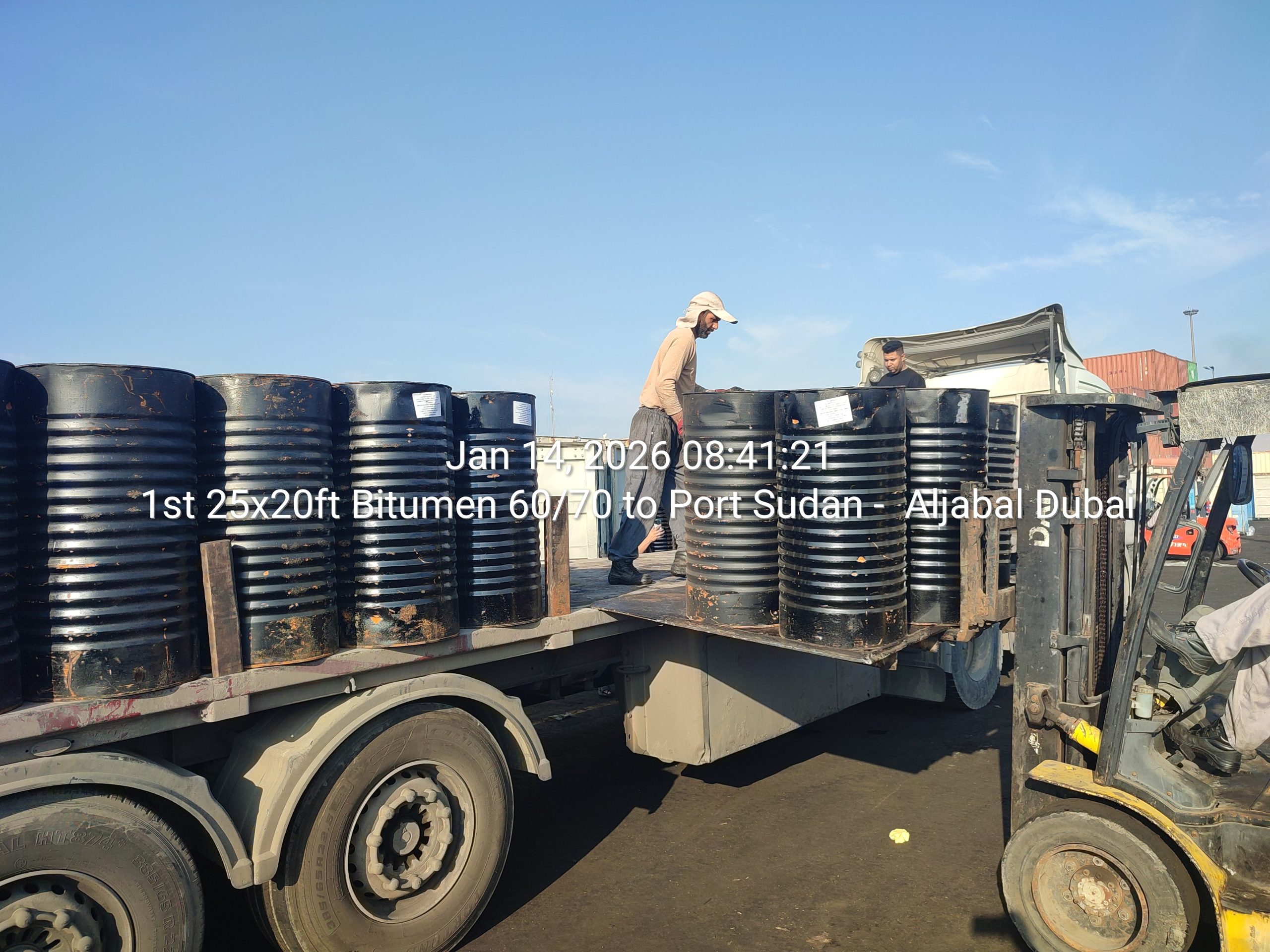
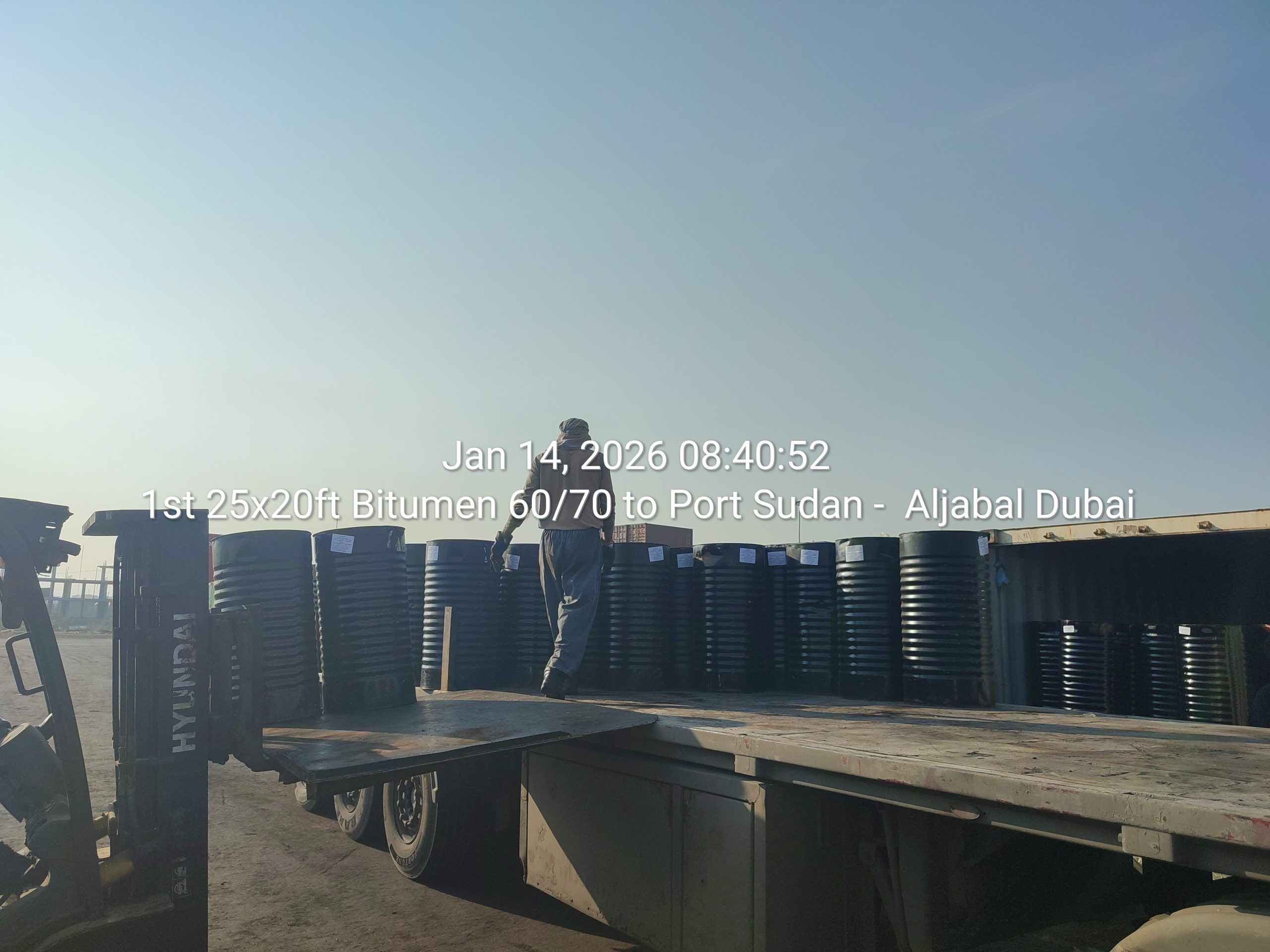
Each of the 25 containers used for the export was a 20-foot standard dry container, optimized for bulk loading. These containers are ideal for transporting drums of bitumen due to their insulation properties and secure sealing, ensuring product stability and safety.
- Container Type: 20-foot standard dry containers
- Total Containers: 25
- Bitumen Grade: 60/70
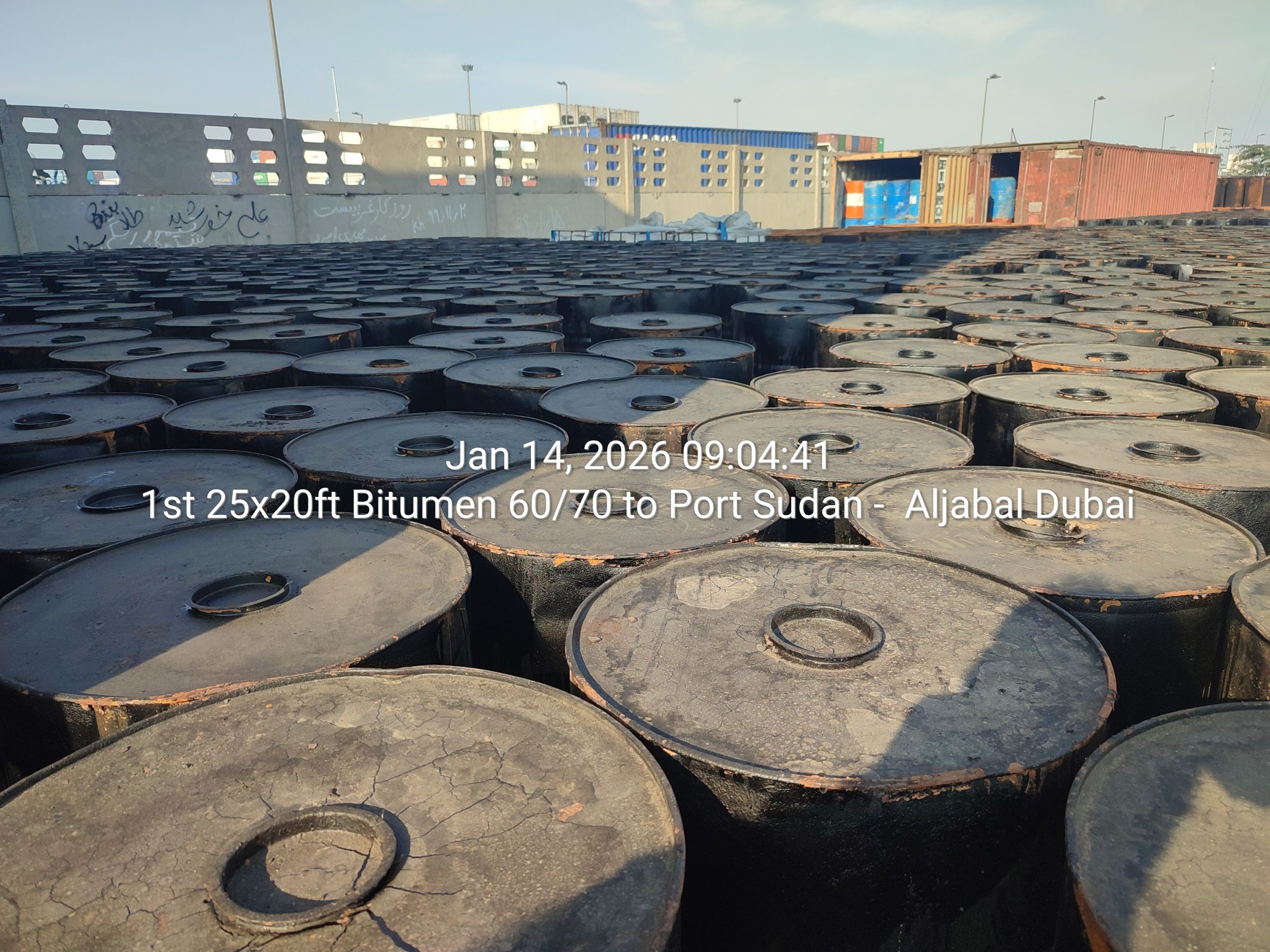
- Drum Type: New steel drums, 180–200 kg each
- Loading Capacity: Approx. 110–120 drums per container
Date and Port of Shipment
The shipment was executed in early January 2026, strategically timed to meet project deadlines in Sudan that align with the dry construction season.
- Date of Departure: January 10, 2026
- Port of Origin: Jebe Ali, UAE
- Carrier Name: Maersk Line (or equivalent shipping line)
Destination and Receiver Details
The bitumen was destined for Port Sudan, the country’s key commercial seaport, where local distributors and government contractors are coordinating the internal distribution for ongoing road development projects.
- Port of Arrival: Port Sudan
- Receiver: Government-authorized infrastructure contractor (name confidential for trade privacy)
- Final Use: National highway and provincial road expansion
About Bitumen 60/70
What is Bitumen 60/70?
Bitumen 60/70 is a penetration grade bitumen widely used in road construction and surfacing. The numbers 60/70 refer to the penetration value of the bitumen, measured in 1/10 mm. It indicates the hardness or softness of the bitumen—where a needle penetrates the bitumen sample under specified conditions.
In essence, 60/70 is medium-hard and is highly effective in tropical climates like Sudan, where both flexibility and durability are required.
Technical Specifications
- Penetration Value: 60–70 dmm
- Softening Point: 49–56 °C
- Viscosity at 60°C: Minimum 1000 Poise
- Ductility: > 100 cm
- Flash Point: > 230 °C
- Solubility in Trichloroethylene: > 99.0%
These specs make 60/70 ideal for asphalt paving, binder layers, and highways, offering reliable performance under heavy traffic and extreme temperatures.
Application and Usage
- National highways and expressways
- Rural road infrastructure
- Airport runways
- Parking lots
- Industrial pavements
Its adaptability and resilience make it the preferred choice in government-funded infrastructure projects throughout the African continent.
Significance of the Export
Strategic Importance for Sudan
Sudan has been intensifying its investment in transportation infrastructure, especially in rural road networks and trade corridors connecting to neighboring countries. This shipment directly supports the government’s 2026 Infrastructure Plan, which includes over 2,000 km of new asphalt roads.
Industrial Development Implications
The availability of quality bitumen directly influences project quality, completion timelines, and economic upliftment. Local contractors benefit from consistent supply, allowing them to meet contractual deadlines, reduce project costs, and maintain engineering standards.
This strategic export is not just about bitumen—it’s a catalyst for industrial and economic transformation.
Export Process and Compliance
Documentation and Customs Clearance
One of the crucial aspects of any international shipment—especially for sensitive commodities like bitumen—is the documentation and customs process. The January 2026 bitumen export to Sudan followed rigorous compliance protocols, ensuring smooth cross-border movement. All necessary paperwork was prepared ahead of the shipment to prevent delays.
Key documents included:
- Commercial Invoice
- Packing List
- Certificate of Origin
- Bill of Lading
- SGS or third-party Quality Inspection Certificate
- Export License and Permits
This shipment also required special customs clearance both at the port of departure in Bandar Abbas and upon arrival at Port Sudan. Efficient handling through experienced customs brokers allowed for seamless processing within 24–48 hours.
Quality Assurance and Certification
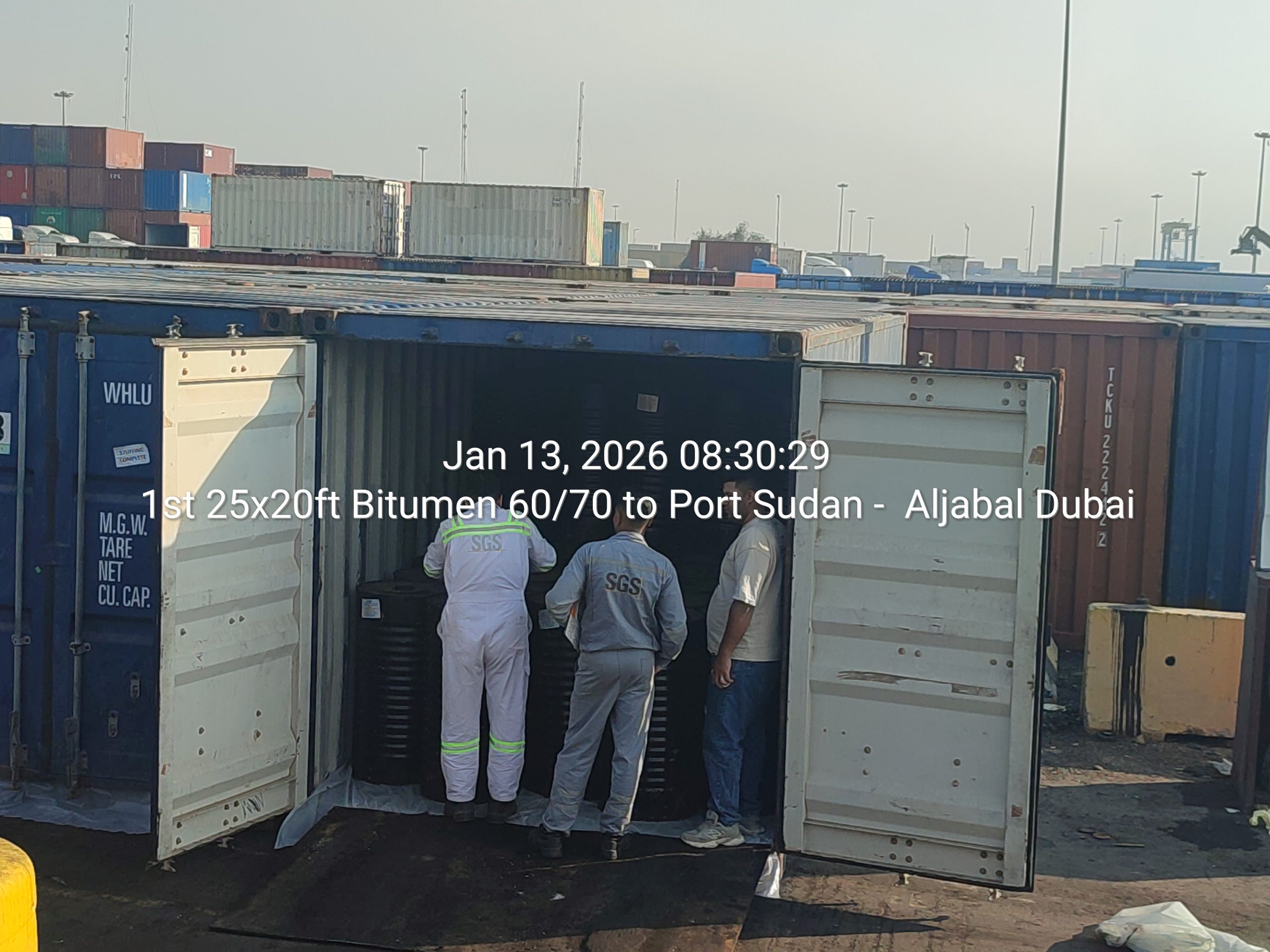
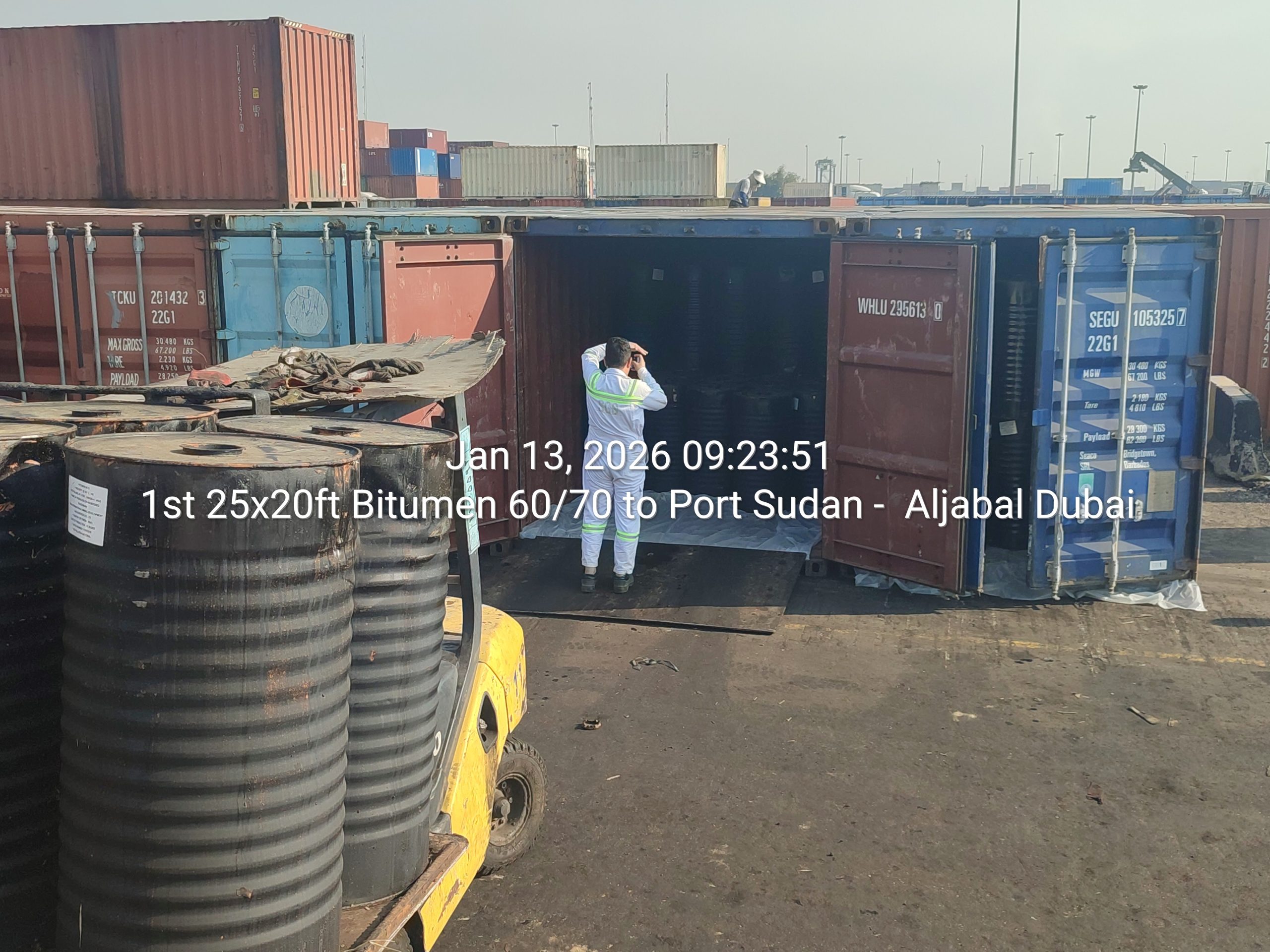
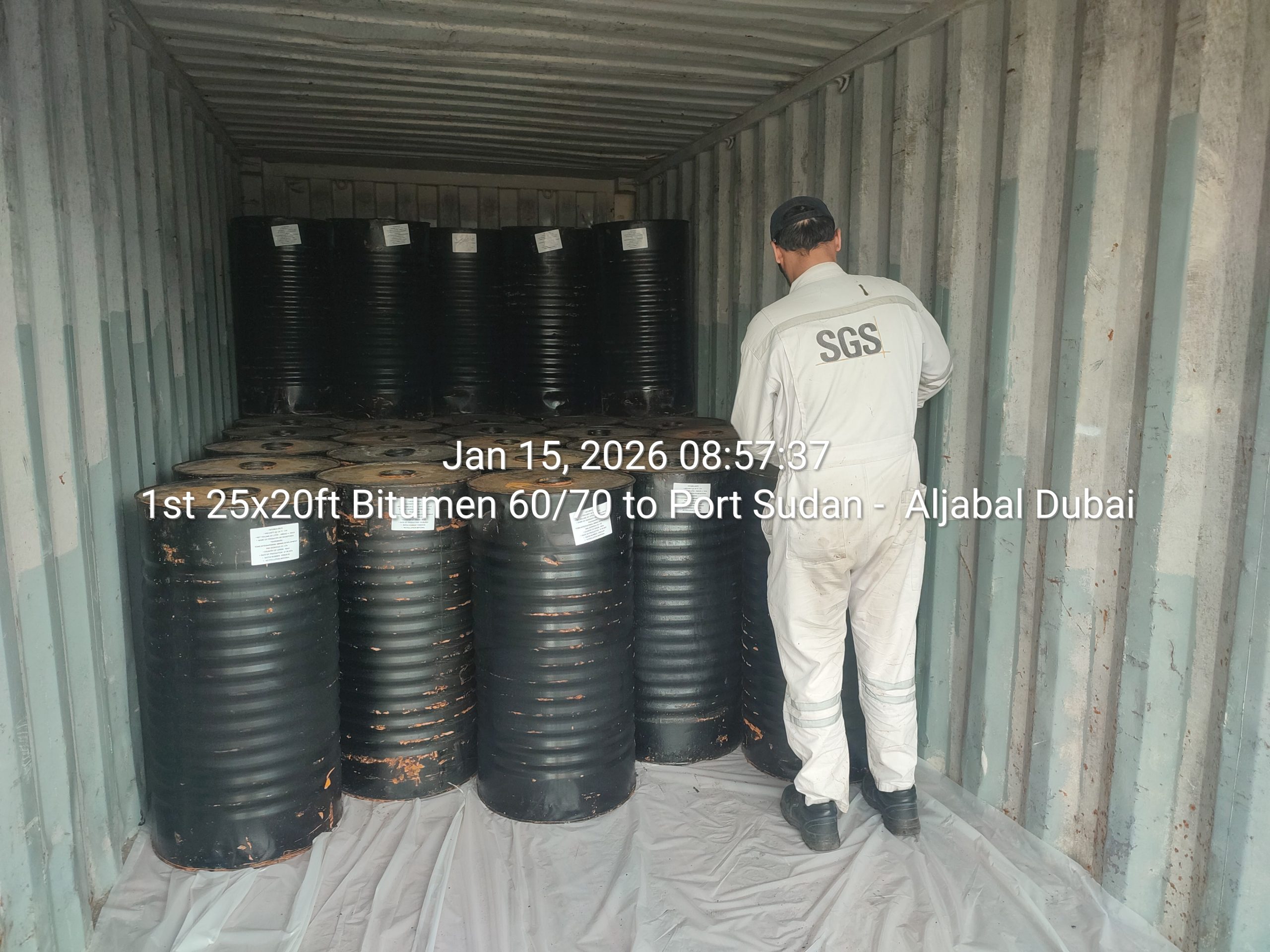
The exported bitumen underwent third-party inspection and lab testing to ensure it met international standards (ASTM D946 / AASHTO M20). An SGS-certified lab verified all parameters such as penetration, softening point, ductility, and flash point.
The Certificate of Quality (COQ) was issued and attached to the cargo manifest, ensuring transparency and trust between the supplier and buyer. This certificate guarantees that the product was in perfect condition and within specifications at the time of loading.
Environmental and Safety Standards
Bitumen is considered a hazardous material during transport. The export team implemented strict safety measures, such as:
- UN-approved steel drums
- Proper labeling for hazardous goods
- MSDS (Material Safety Data Sheets) attached
- Fire-safety and spill prevention training for staff
By adhering to both IMO (International Maritime Organization) regulations and local environmental codes, the exporter ensured that the shipment complied with global shipping safety standards.
Origin and Manufacturing Source
Refinery Information
The bitumen supplied in this shipment was sourced from a well-established refinery, known for its high-purity bitumen production. This facility utilizes vacuum distillation of crude oil, producing bitumen with high consistency and uniformity across batches.
Refineries are strategically located near export terminals, which minimizes inland transport costs and time, giving buyers in Sudan a logistical advantage.
Country of Origin
- Refinery Type: State-of-the-art, ISO-certified
- Production Method: Straight-run vacuum bottom distillation
Aljabal Holding bitumen, particularly of penetration grade 60/70, is highly sought after in African and Asian markets due to its balance of price, performance, and availability.
Logistics and Transportation
Shipping Methodology
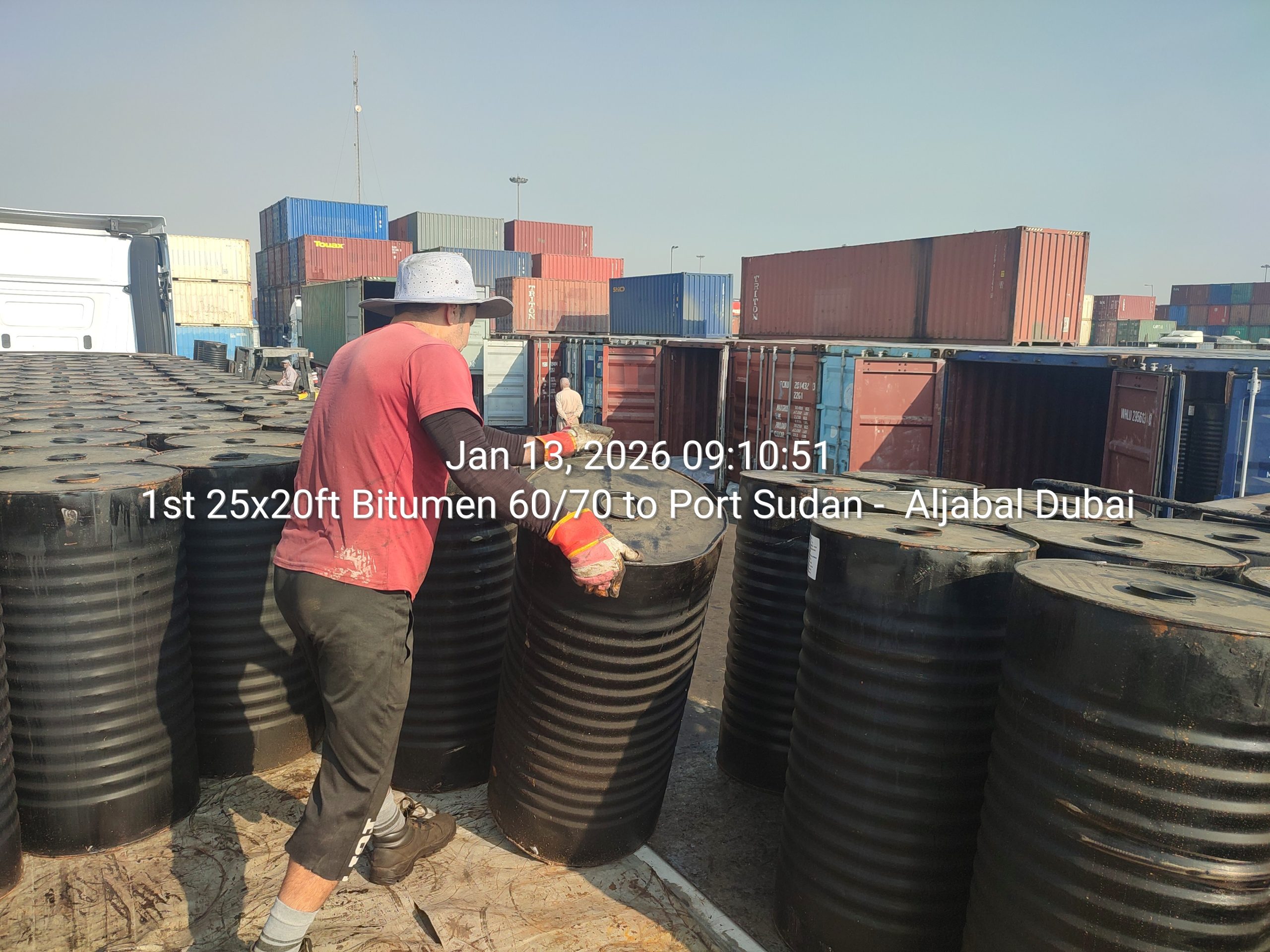
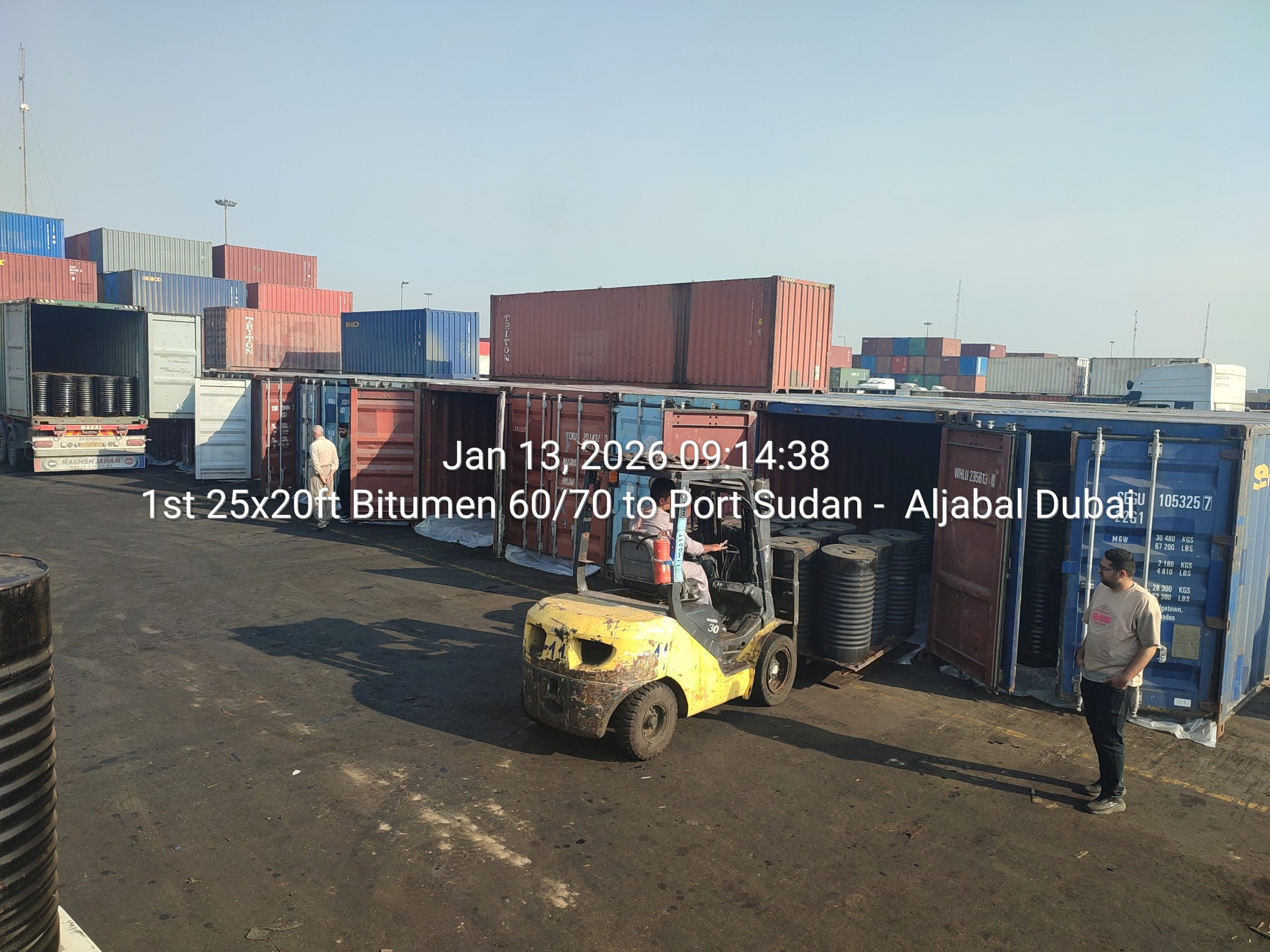
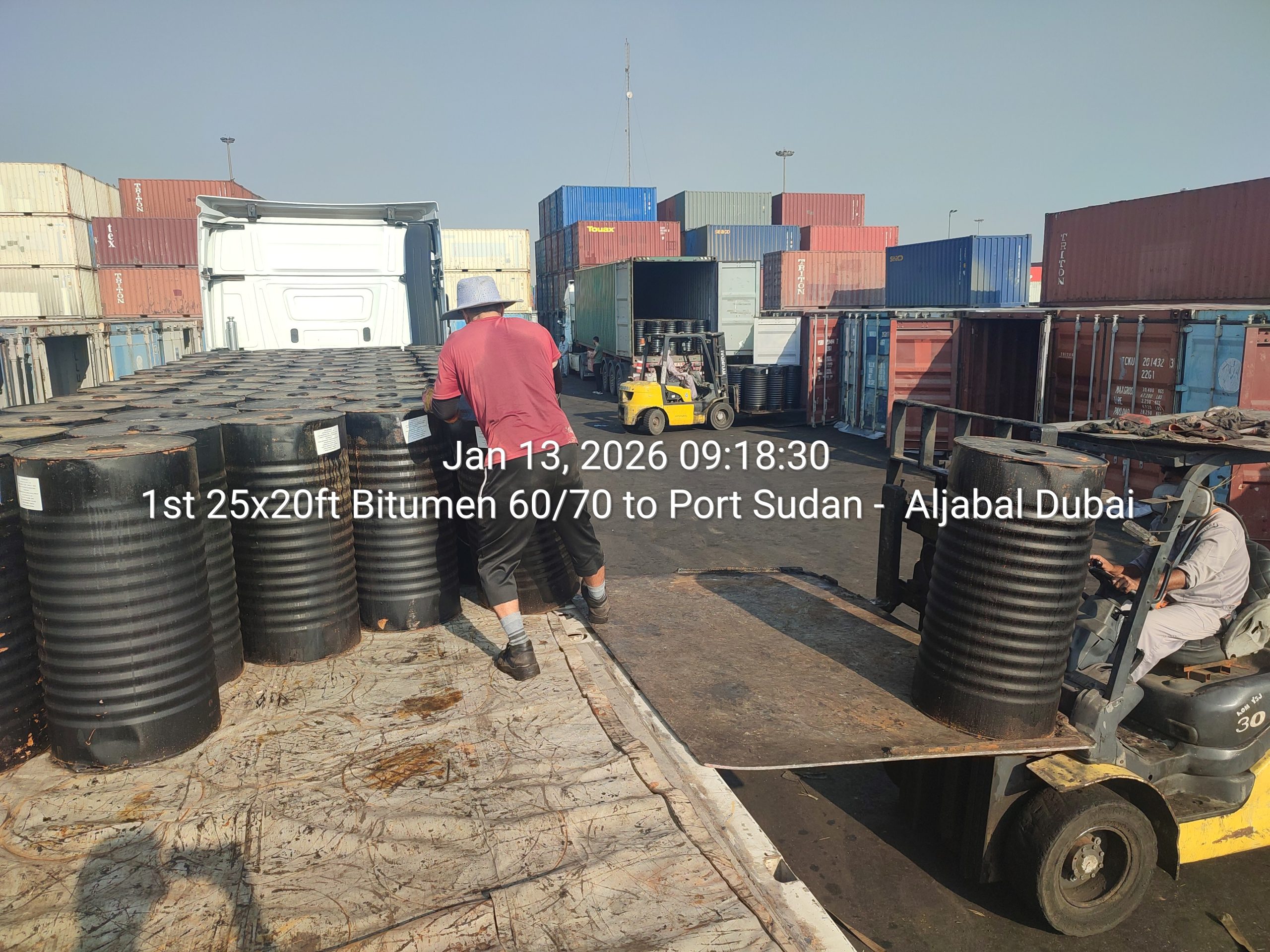
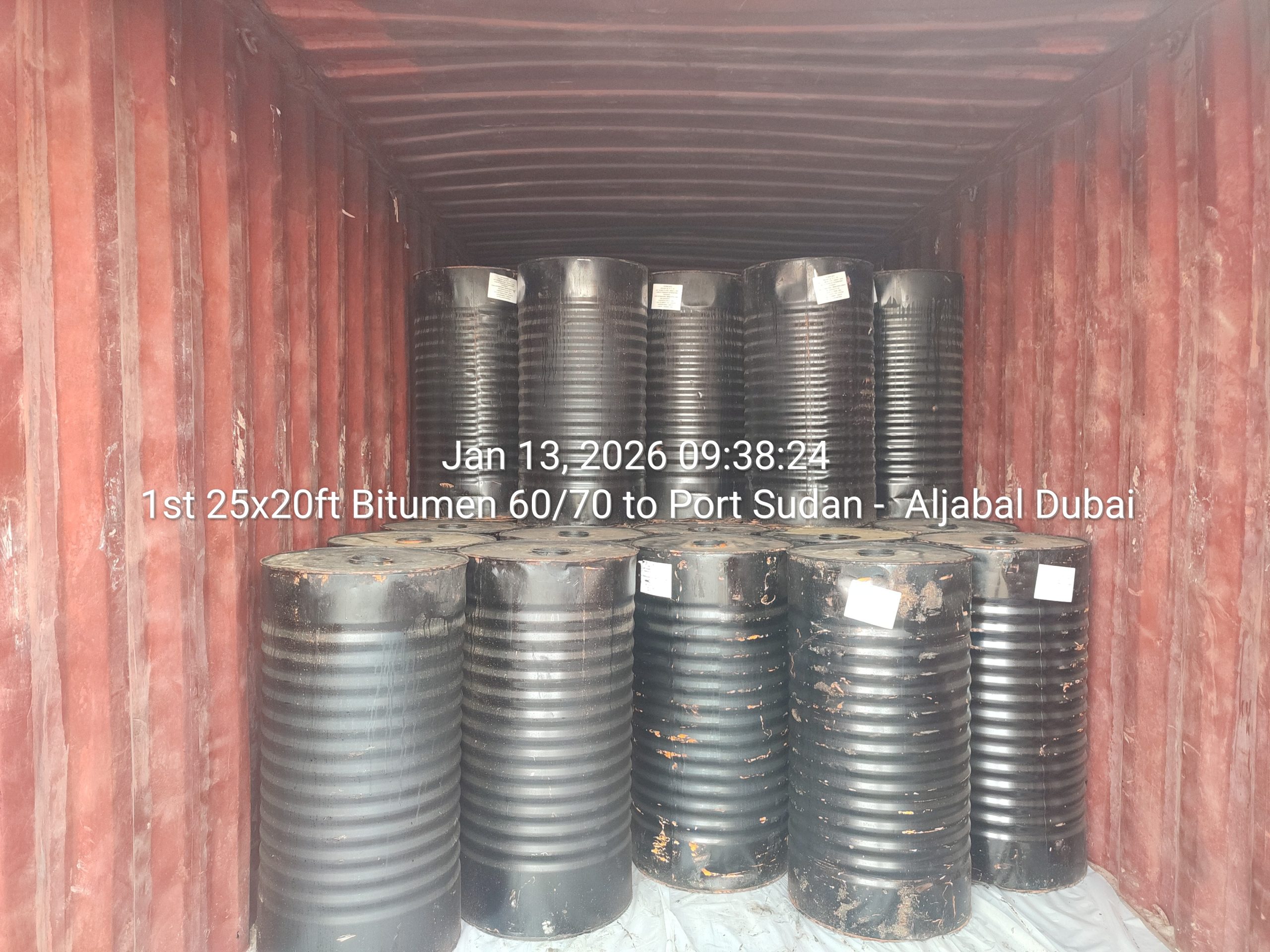
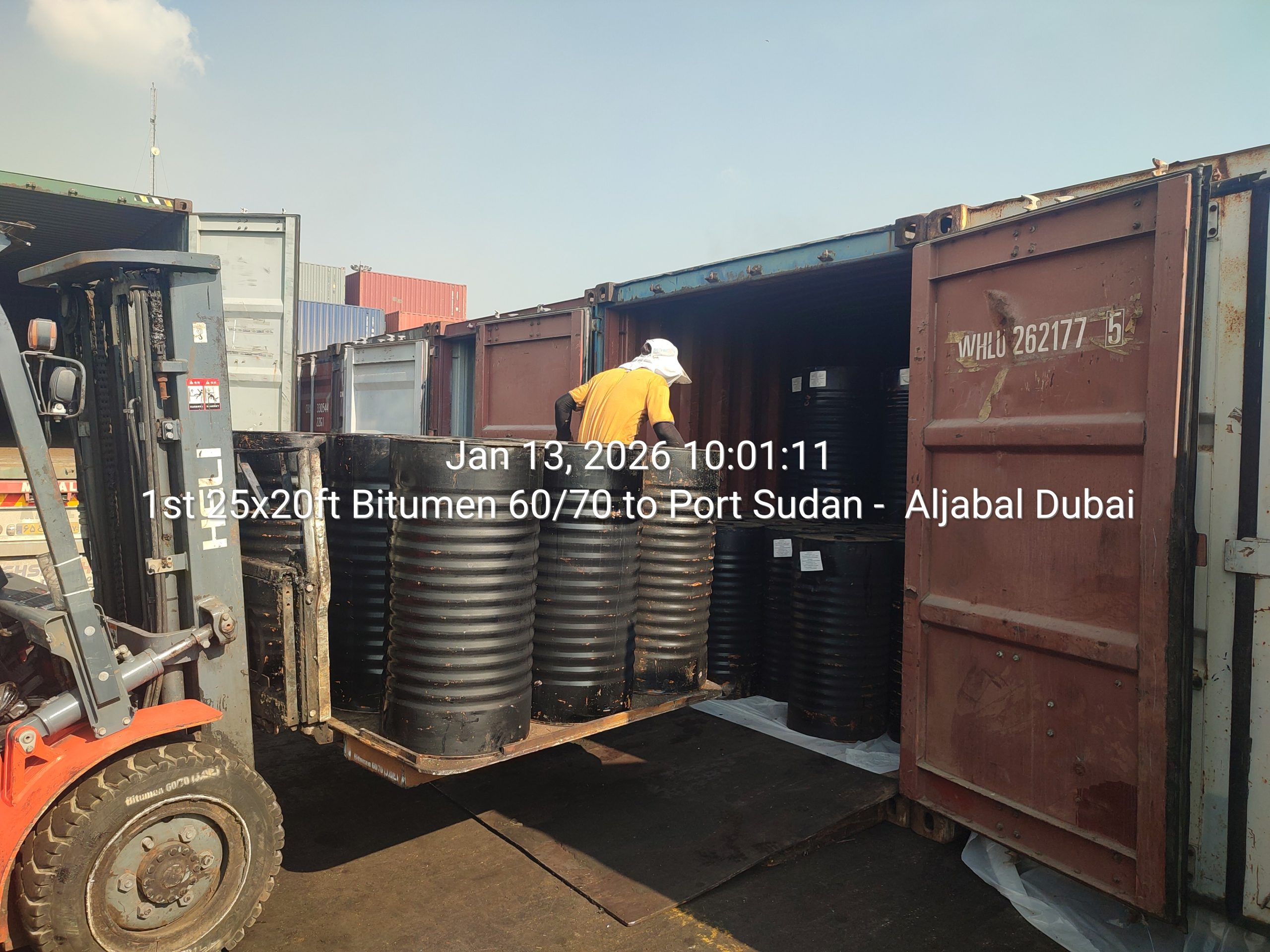
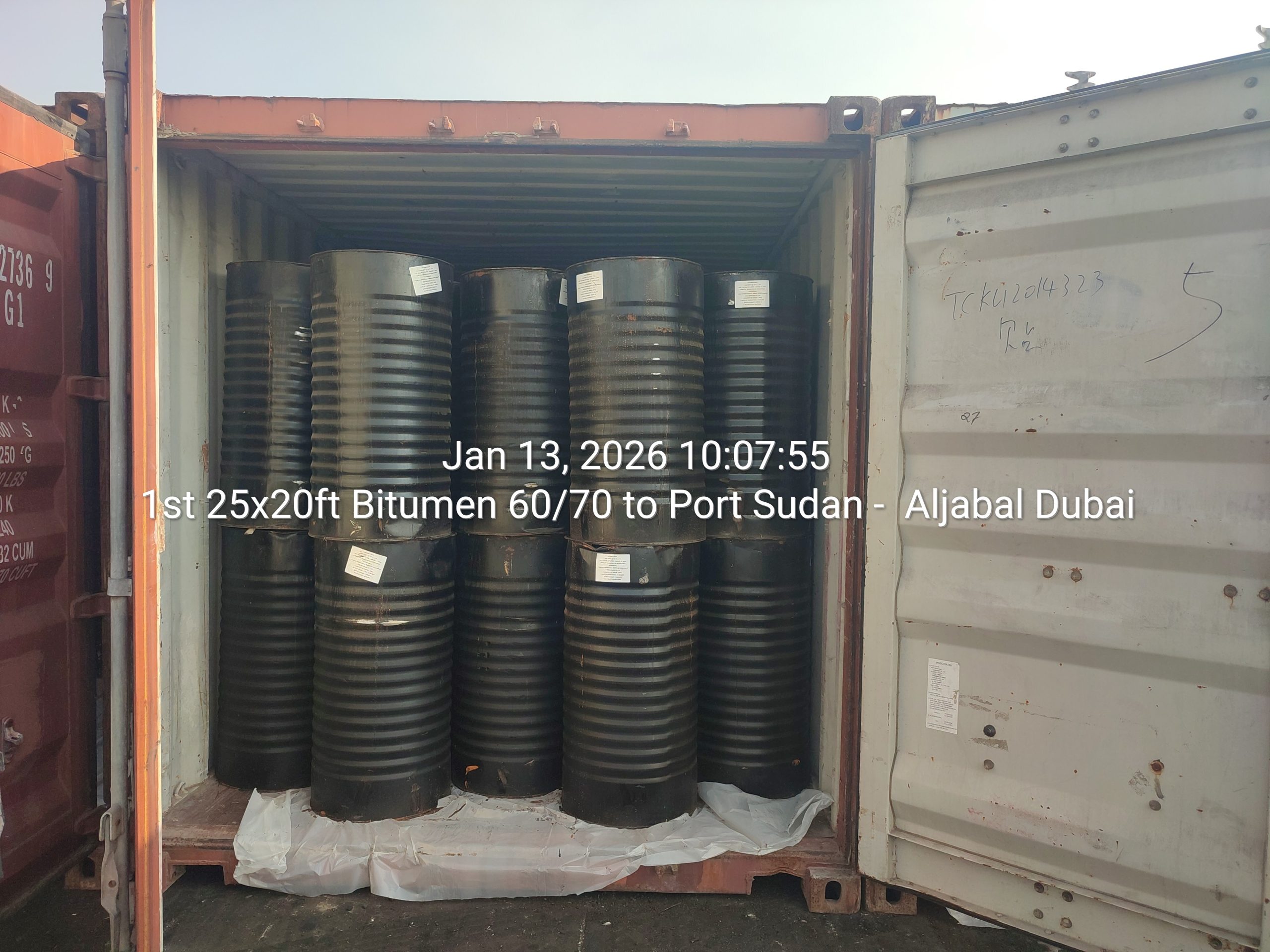
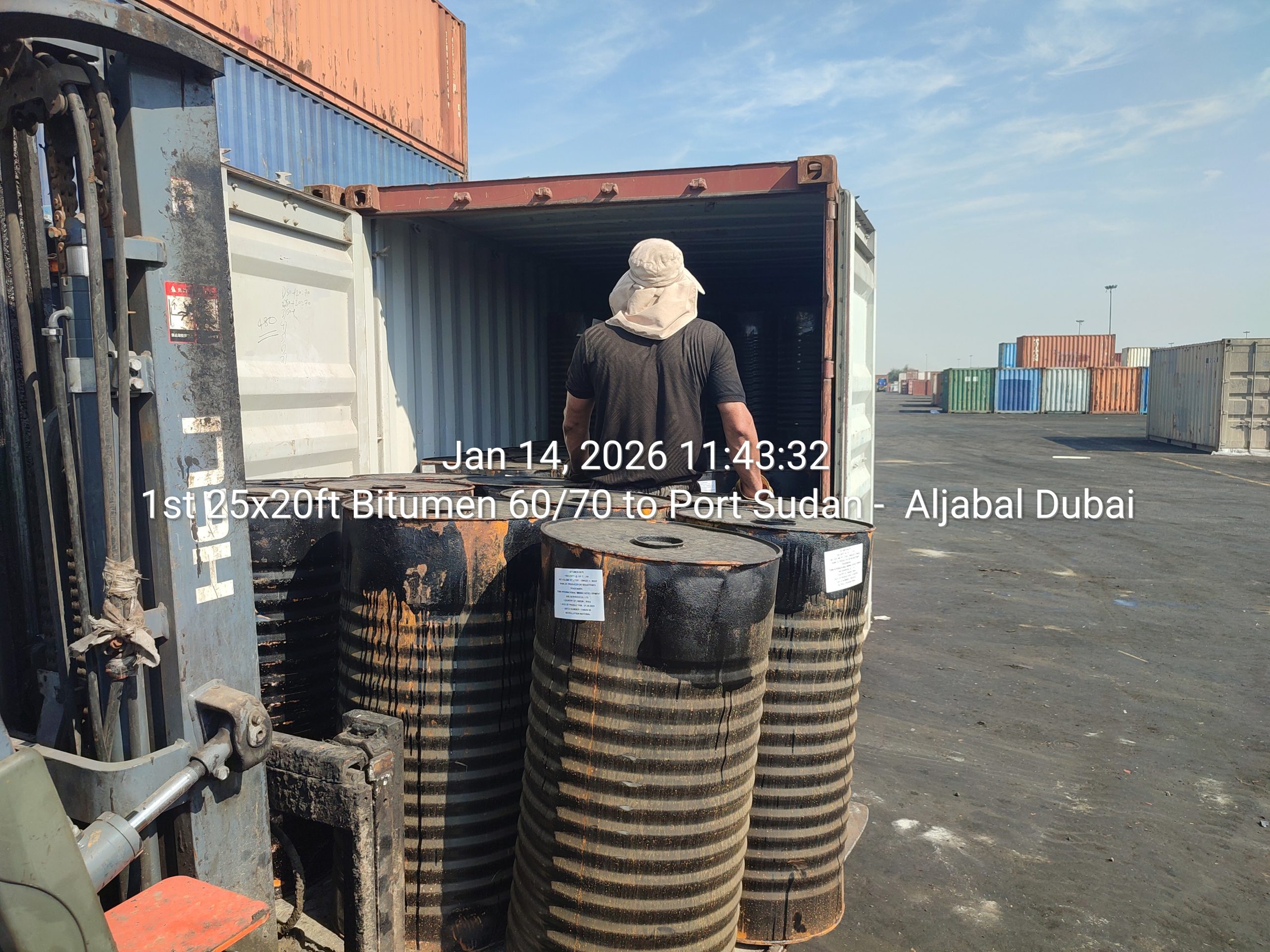
The shipment was loaded in steel drums, which were palletized and secured inside standard 20-foot containers. Each drum was:
- Coated internally to avoid chemical reactions
- Double-sealed to prevent leakage
- Labeled with batch number and grade
Once packed, containers were loaded onto ocean freight vessels under FCL (Full Container Load) arrangements. FCL shipping ensures:
- Better cargo safety
- Reduced risk of contamination
- Faster transit times
Port Handling
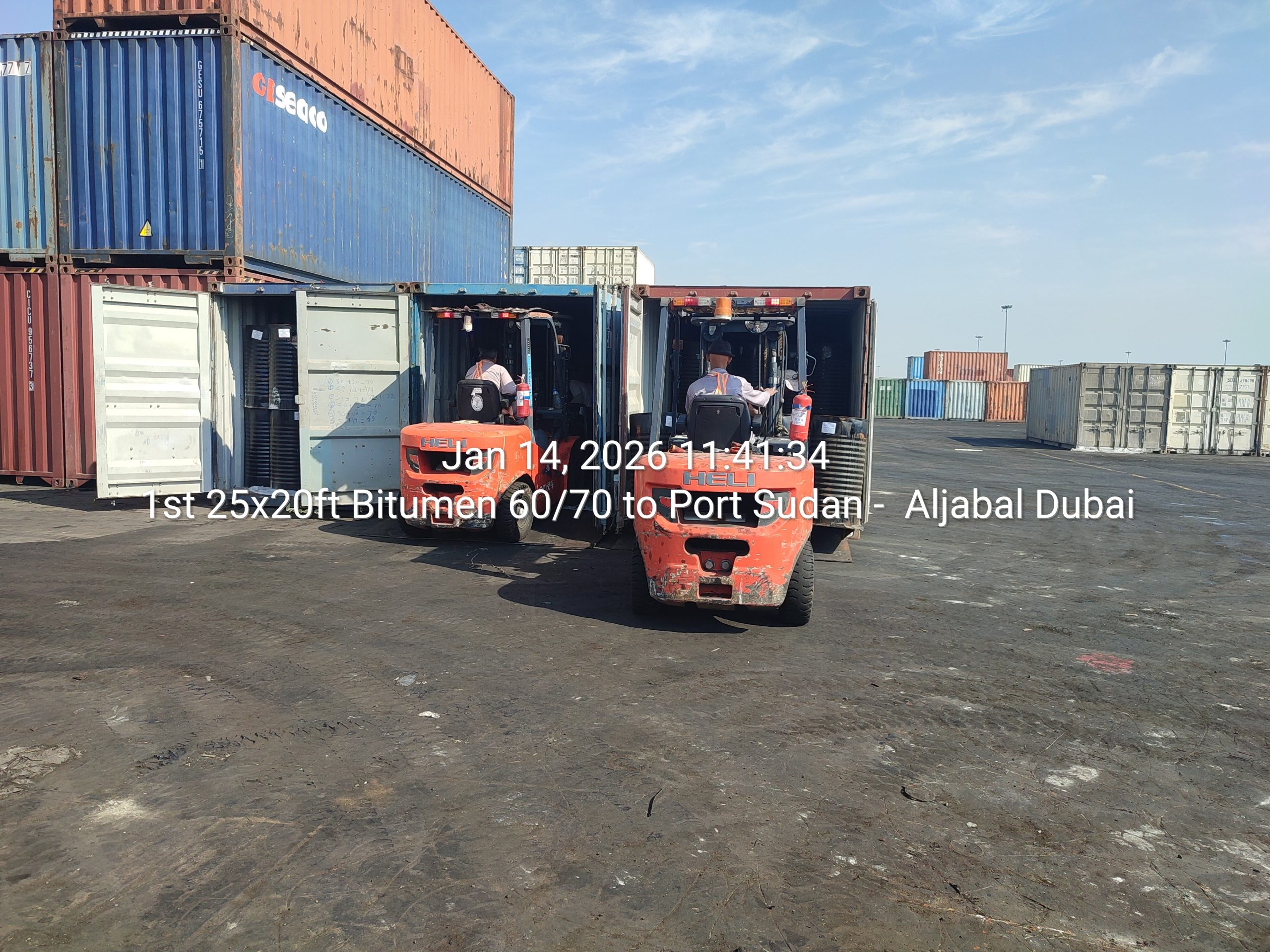
Handling procedures at Bandar Abbas included:
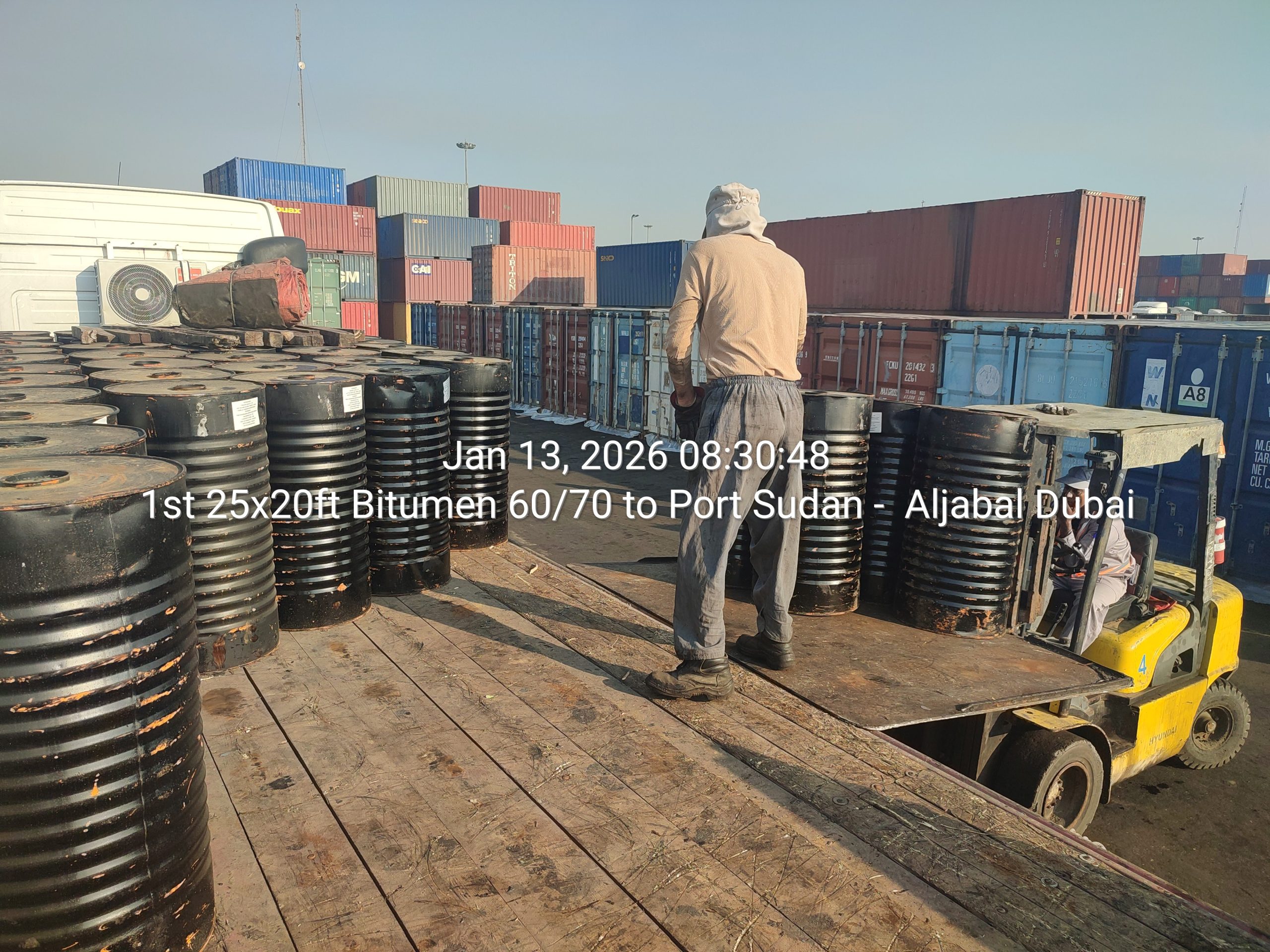
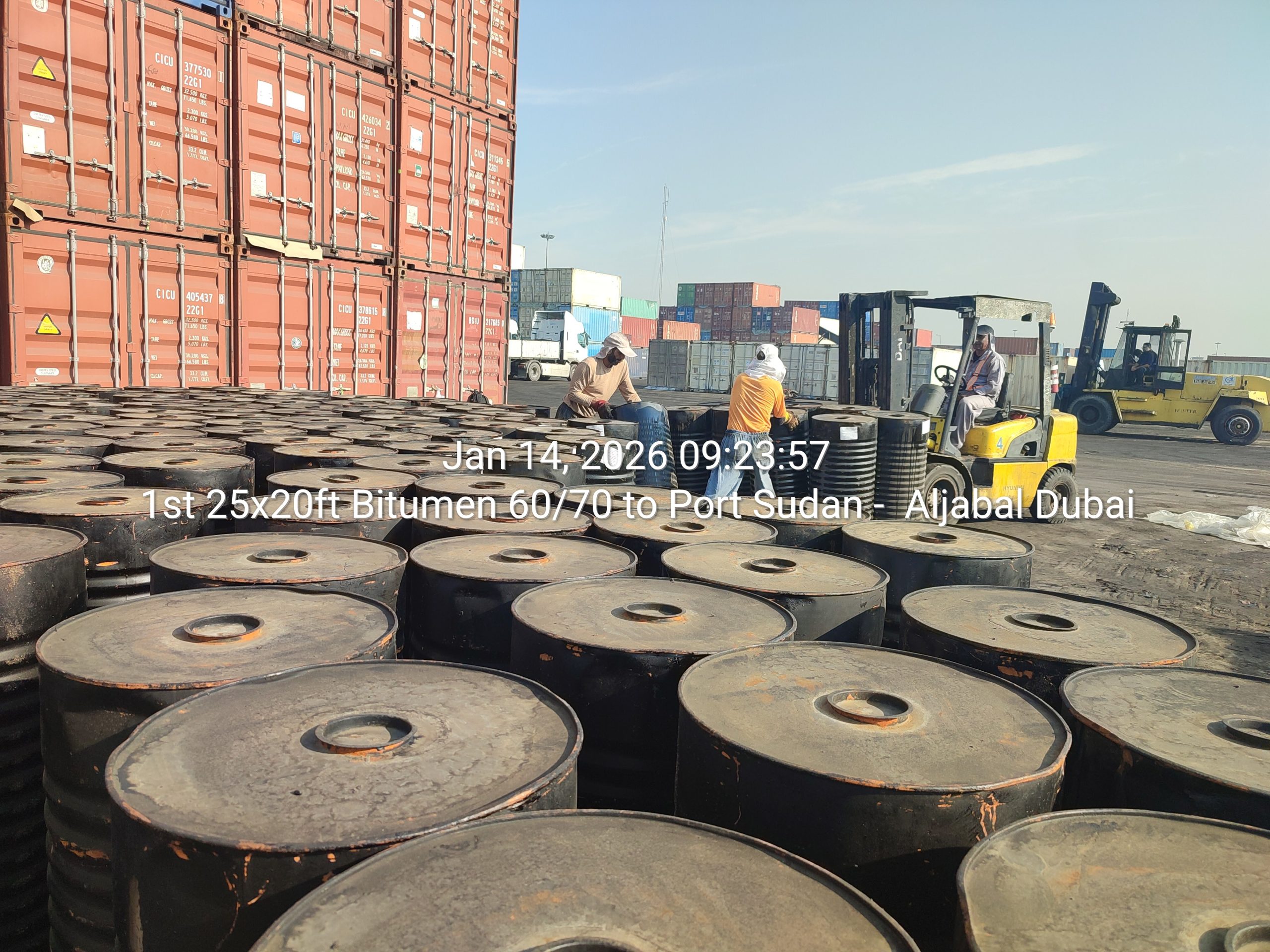
- Use of forklifts for safe drum loading
- Cargo inspection by customs and SGS agents
- Container sealing and tracking integration
On arrival at Port Sudan, the receiving logistics team performed unloading, rechecking, and transportation to inland distribution centers via road freight.
Transit Time
- Estimated Transit Duration: 12–18 days
- Route: Persian Gulf → Arabian Sea → Red Sea → Port Sudan
- Carrier Tracking: Enabled via GPS and carrier partner portal
Customer and Market Demand in Sudan
Bitumen Demand in Construction Sector
Sudan’s construction sector is undergoing rapid development. The government’s focus on transport infrastructure, oil pipeline maintenance, and airport upgrades has created a surge in bitumen demand, especially for reliable grades like 60/70.
Private construction firms, road contractors, and government authorities are all prioritizing stable, long-term bitumen supplies—especially those that conform to international road safety and durability standards.
Government Infrastructure Projects
Sudan’s Ministry of Roads and Bridges has earmarked several large-scale infrastructure projects in 2026, including:
- Rehabilitation of 850 km of rural roads
- Construction of new inter-state highways
- Expansion of trade corridors connecting Ethiopia and Egypt
These projects require consistent delivery of high-quality bitumen, reinforcing the importance of this initial shipment.
Regional Market Trends
Neighboring countries such as Ethiopia, South Sudan, and Chad also face similar infrastructure needs. Sudan is quickly positioning itself as a logistics hub for inland distribution of materials, increasing regional bitumen demand even further.
Economic Impact
Export Revenue
This shipment not only benefits Sudan but also supports the exporting country’s economy. With bitumen prices ranging between $400–$500 per ton (depending on global oil prices), each container of bitumen generates significant foreign currency income.
- Estimated Shipment Value: $1.2–$1.5 million
- Mode of Payment: LC (Letter of Credit)
- Banking Channel: Internationally registered financial institution
Such exports boost economic activity for refineries, logistics providers, and shipping companies in the country of origin.
Job Creation and Industry Benefits
From drum manufacturing and drum filling plants to port workers, customs agents, shipping crews, and truck drivers—this shipment supports thousands of jobs across the supply chain.
It also encourages technological investment in:
- Modern drum packaging systems
- Bitumen testing labs
- Blockchain-based shipping documentation systems
Sustainability and Quality Commitment
Quality Testing Process
Before the bitumen was dispatched, every batch went through strict quality control protocols. This included on-site laboratory testing for:
- Penetration consistency
- Softening point accuracy
- Water content levels
- Ductility and elasticity
- Flash and fire points
Third-party certifications were obtained from globally recognized agencies like SGS, Bureau Veritas, and Intertek, further validating the integrity of the product. These labs performed blind testing from random drum samples to prevent tampering and ensure consistency across all containers.
What’s impressive is the batch traceability system used. Each drum bore a unique batch number linked to its production date, test report, and quality stamp. This allowed the Sudanese importers to easily verify the product’s origin and compliance.
Long-Term Sustainability Goals
The exporter emphasized their dedication to sustainability, not just profit. By using recyclable drums, low-sulfur raw material, and optimized container loading, they managed to:
- Minimize carbon footprint
- Reduce logistics costs
- Promote circular economy initiatives
Additionally, steps were taken to ensure that waste material from drum manufacturing was either recycled or repurposed for industrial use. This aligns with global ESG (Environmental, Social, Governance) standards, which are increasingly important in global supply chain partnerships.
Packaging and Storage of Bitumen
Drum Type and Containerization
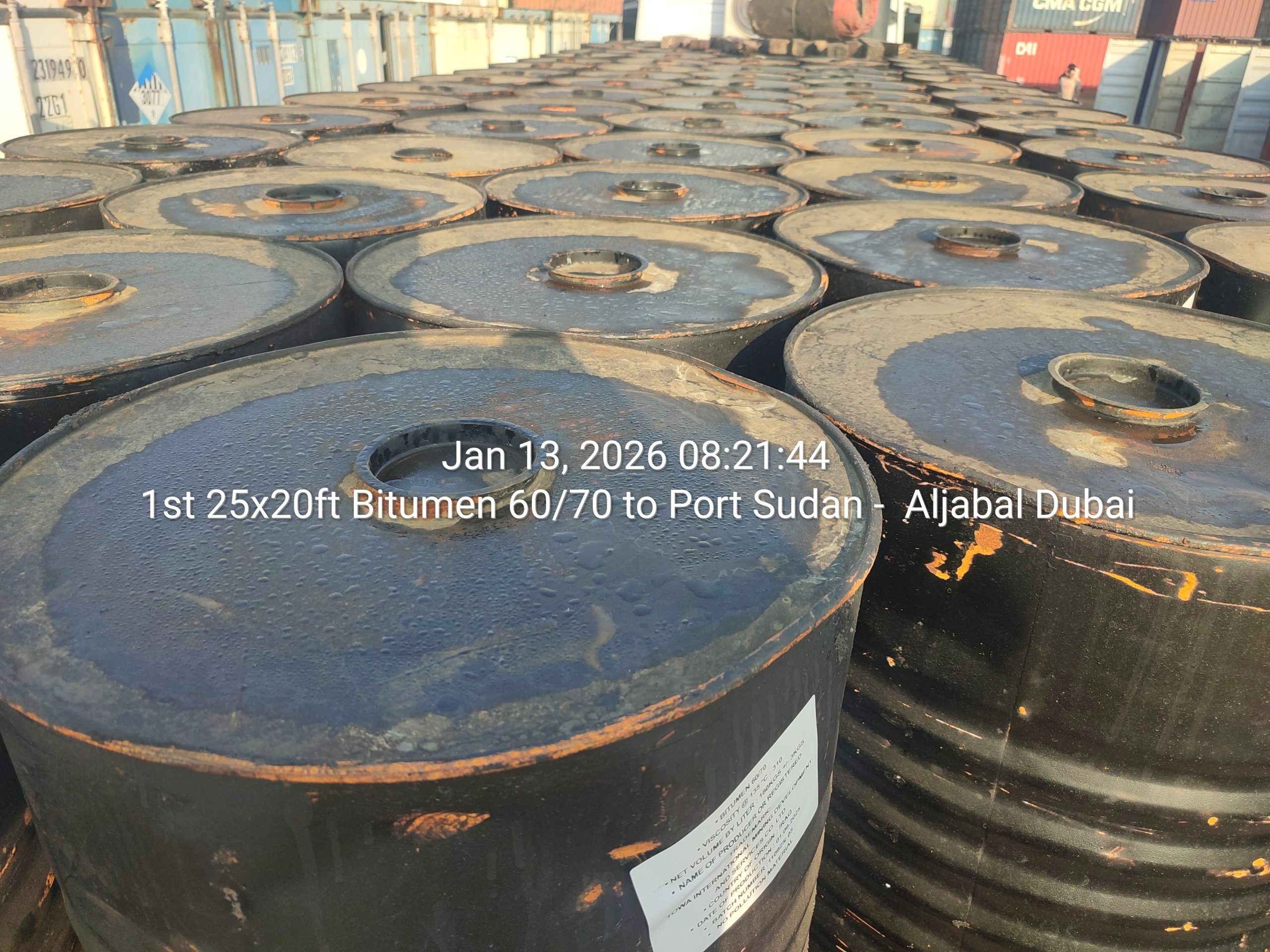
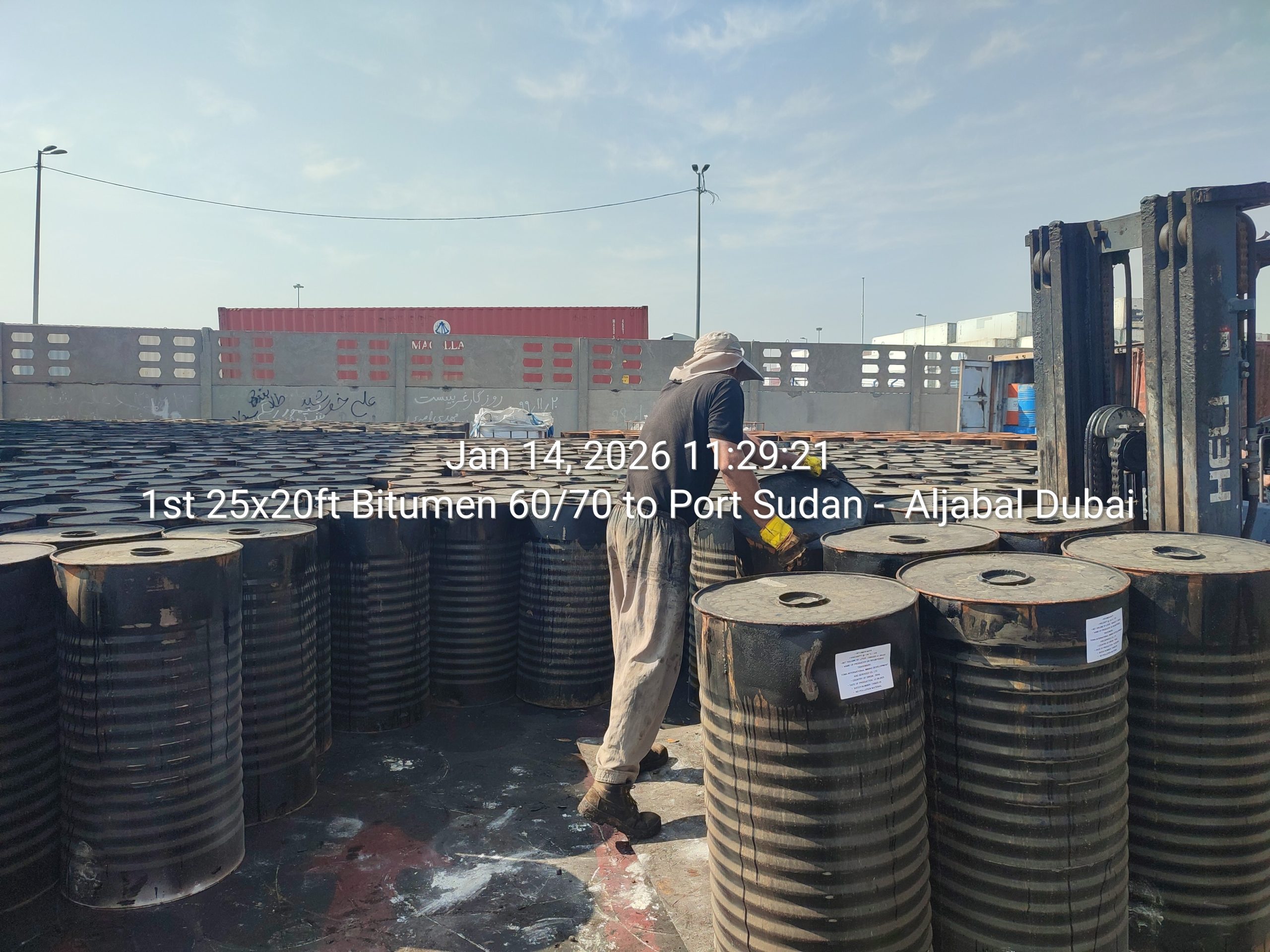
The bitumen was packaged in new 180–200 kg steel drums, specifically designed for hot-filling and long-distance transport. These drums are:
- Internally lacquered to resist corrosion
- Externally painted with black anti-rust coating
- Double-seamed and leak-tested
Each container carried around 110–120 drums, depending on the net weight and local loading laws. The interior of each 20-foot container was lined and sealed to avoid spillage or condensation during transit.
Why use drums instead of bulk?
Simple: Drums are easier to handle at small and medium-sized construction sites in Sudan, where unloading bulk tankers can be impractical or costly. Drums also offer better control over usage and storage.
Storage Best Practices
Upon arrival in Sudan, the drums were stored in shaded, temperature-controlled warehouses to prevent bitumen degradation. Sudanese climate can reach over 40°C, which makes proper storage critical.
Key storage practices include:
- Keeping drums upright
- Avoiding exposure to direct sunlight
- Placing drums on pallets to prevent ground moisture damage
- Regularly inspecting seals and caps for leaks
Proper storage ensures the bitumen’s shelf life of 12+ months is maintained, preserving its performance when applied to roads or surfaces.
Challenges in Export
Logistical Barriers
Even the best-planned shipments face logistical hiccups. In this case, minor challenges included:
- Port congestion at Bandar Abbas, leading to limited container space availability
- Shortage of empty containers during high-export seasons
- Customs delays due to new regional trade protocols post-2025 sanctions changes
Nevertheless, due to pre-scheduling and reliable freight partners, delays were minimized to within 48–72 hours.
Climatic Constraints
Bitumen is temperature-sensitive. Excessive heat or cold can impact its viscosity and usability. The exporters used heat-resistant drums and insulated container linings to mitigate the effects of Middle Eastern and East African climates during the voyage.
Sudan’s hot climate also meant precautions were necessary during unloading to prevent softening or premature degradation.
Regulatory Issues
New import regulations in Sudan, including more detailed inspection requirements and digital customs processes, introduced a learning curve for both exporters and importers. The adoption of electronic bill of lading systems was key in resolving paperwork bottlenecks.
Despite these hurdles, the exporter’s proactive approach ensured smooth delivery.
Future Shipment Plans
Timeline for Next Consignments
This January 2026 shipment is just the tip of the iceberg. The export agreement between the supplier and Sudanese counterpart spans the entire year, with monthly or bi-monthly deliveries scheduled based on project timelines in Sudan.
- Next Shipment ETA: March 2026
- Planned Frequency: 1–2 shipments per month
- Total Planned Volume: 300+ containers throughout 2026
This allows for supply chain consistency, minimizing project delays and material shortages.
Total Volume of Bigger Shipment
The full shipment plan includes:
- Total Containers: ~300 (25–30 containers per batch)
- Total Tonnage: Over 6,000 metric tons
- Delivery Span: January to December 2026
- Distribution Scope: National highways, urban streets, provincial infrastructure
By the end of 2026, this initiative will have supported dozens of public infrastructure projects across Sudan, improving mobility, boosting trade, and creating jobs.
Conclusion
This landmark shipment of 25×20 containers of high-quality Bitumen 60/70 to Sudan in January 2026 not only signals the start of a much larger export operation—it represents a turning point for Sudan’s infrastructure development. With proper logistics, high-quality material, and a commitment to sustainability, both the exporter and Sudan are set to benefit from this win-win collaboration.
From technical specifications to logistics coordination, everything was carried out with precision, reflecting the professional maturity of the supply chain. As Sudan positions itself as a transport and trade hub in East Africa, the timely and efficient supply of bitumen will play a crucial role in driving its economic growth.
This export sets a strong precedent for future trade partnerships, and as we look ahead, the road—quite literally—is paved with opportunity.
FAQs
1. What is the typical use of bitumen 60/70 in Sudan?
Bitumen 60/70 is commonly used in asphalt pavement construction, highways, rural roads, and airport runways due to its durability and optimal viscosity for warm climates like Sudan.
2. How was the shipment transported?
The bitumen was shipped in 20-foot containers, each loaded with 110–120 steel drums. It traveled by ocean freight from UAE’s jebel ali port to Port Sudan, taking approximately 12–18 days.
3. Is this shipment part of a long-term contract?
Yes, this delivery is the first installment of a larger export plan, with over 300 containers scheduled to be sent to Sudan throughout 2026 as part of a government-backed infrastructure agreement.
4. What are the benefits of using 60/70 penetration grade bitumen?
Bitumen 60/70 offers a perfect balance of flexibility and strength, making it ideal for regions with high temperatures. It resists cracking, softens at high temperatures, and ensures long-lasting road surfaces.
5. What makes this bitumen high-quality?
This bitumen underwent rigorous lab testing, third-party certification, and quality packaging. It conforms to ASTM and AASHTO international standards, ensuring performance and consistency.