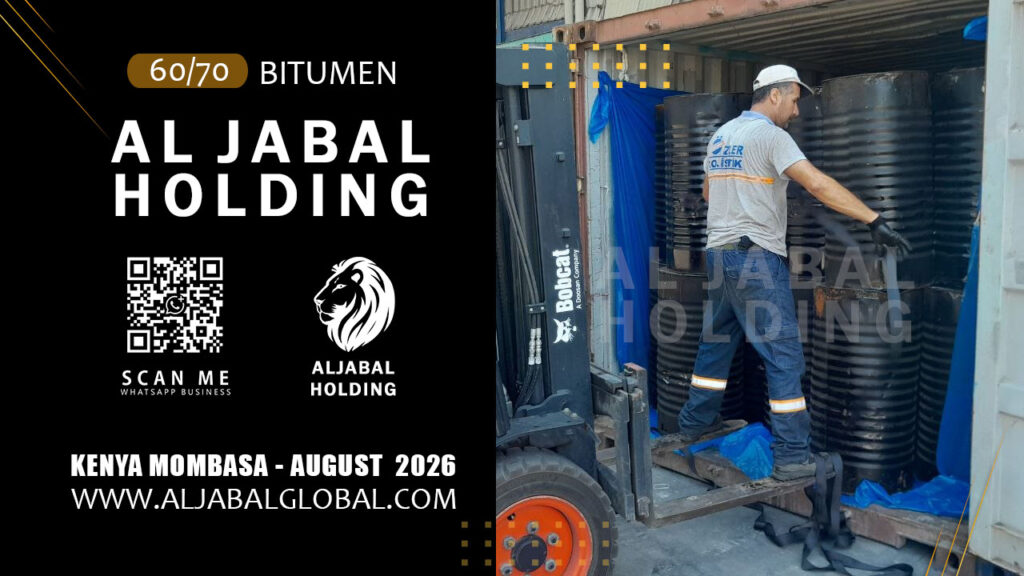
The movement of bitumen 60/70 from Turkey to Mombasa, Kenya, represents the kind of international supply chain that sits quietly behind road construction, infrastructure maintenance, asphalt production, and regional development. According to the shipment information supplied for this article, Aljabal Holding exported bitumen 60/70 in 20 ft containers from Turkey to Mombasa during August 2026. That short description may sound simple, yet a successful bitumen shipment involves considerably more than loading a dark petroleum product into containers and sending it across the sea. Product grade, packaging integrity, container weight, laboratory testing, export documentation, marine transportation, customs requirements, storage conditions, and buyer verification all matter.
For contractors and procurement teams searching for a bitumen 60/70 supplier for Kenya, the details behind a shipment can be more valuable than promotional claims. A supplier may describe itself as experienced, competitive, or reliable, but serious buyers normally want evidence: a certificate of analysis, packing information, origin documentation, commercial paperwork, photographs of loading, and transport records that connect the cargo to a specific transaction. These documents create traceability. Think of them as the passport stamps of an international commodity shipment; each one helps establish where the cargo originated, what it contained, and how it moved.
For prospective importers, the central question is straightforward: what should a professional Turkey-to-Mombasa bitumen supply process actually look like? The sections below explain the product, shipping model, quality controls, documentation, operational risks, and due-diligence steps buyers can use when assessing an international bitumen transaction.
Executive Overview of the August 2026 Turkey-to-Kenya Bitumen Shipment
The commercial brief behind this article identifies Aljabal Holding, Turkey, Mombasa in Kenya, August 2026, 20 ft containers, and penetration-grade bitumen 60/70 as the principal shipment details. Together, those elements describe a conventional containerized export route aimed at delivering road-paving material from an established regional trading and manufacturing market into East Africa. What should not be done, however, is turn a limited shipment brief into invented precision. Without the relevant logistics records, it would be misleading to publish a fictional number of containers, a made-up vessel, an assumed port of loading, or an exact tonnage merely because those details make an article sound authoritative.
For buyers, the grade itself is significant. Bitumen 60/70 is a penetration-grade paving binder commonly specified for asphalt and roadwork applications where engineering designs call for a material within that penetration classification. Penetration grading relates to the consistency or hardness of the binder under defined laboratory conditions. That does not mean every cargo labeled 60/70 is automatically interchangeable. Actual conformity should be established through testing against the contractual specification agreed between buyer and seller.
Containerized supply can also serve a practical commercial purpose. Bulk bitumen transport usually depends on specialized heated equipment and terminal infrastructure, while containerized or packaged material can provide greater flexibility for buyers whose consumption levels, inland logistics, or storage arrangements do not justify a bulk tanker movement. A 20 ft container is particularly relevant because bitumen is dense. Container payload and road axle restrictions can become limiting factors well before physical container volume is exhausted.
Mombasa, meanwhile, is a natural maritime gateway for Kenyan imports and for certain cargoes moving onward into the wider East African market. Once cargo reaches the port, the next challenge is not merely collecting it. The importer has to coordinate clearance, local transport, safe handling, storage, and eventual conversion of the packaged binder into a usable form for an asphalt plant or construction operation.
A credible account of the Aljabal Holding shipment should therefore focus on traceability and operational competence. The most persuasive story is not a string of superlatives. It is a documented chain showing that the right grade was tested, correctly packed, safely transported, properly declared, and delivered through an organized logistics process.
Shipment Snapshot: What Is Known About the Aljabal Holding Export
A shipment profile becomes more trustworthy when it clearly separates provided information from details that require documentary confirmation. Based on the topic supplied for this article, the transaction can be summarized without inventing commercially sensitive or unknown data.
| Shipment Detail | Information Available |
|---|
| Exporter/Trading Company | Aljabal Holding |
| Product | Bitumen 60/70 |
| Shipment Format | 20 ft containers |
| Country of Dispatch | Turkey |
| Destination | Mombasa, Kenya |
| Shipment Period | August 2025 |
This distinction is important. Search engines increasingly reward content that is useful, specific, and trustworthy, while procurement professionals naturally look for the same qualities. Publishing unverifiable specifics may create a polished page for a few minutes, but it can weaken credibility when an experienced buyer asks for the underlying evidence. A stronger commercial page connects statements to documents the supplier can actually produce.
For this August 2026 bitumen 60/70 shipment to Mombasa, useful supporting material could include a redacted bill of lading, export declaration where appropriate, packing list, certificate of origin, laboratory certificate, container loading photographs, seal information, and delivery or discharge evidence. Confidential values, consignee information, banking data, or contract terms can be obscured while still allowing the transaction itself to be demonstrated.
Buyers should also understand that a shipment record establishes execution, not universal product suitability. A past cargo can show that a supplier has arranged a trade lane, but a new project still needs its own technical specification, quantity confirmation, packing requirement, commercial terms, delivery schedule, and inspection plan. Road contractors would not use an old laboratory report to approve a new asphalt mix, and procurement teams should apply the same discipline to commodity sourcing.
For Aljabal Holding, presenting the August shipment through verifiable information would therefore serve two purposes: it demonstrates trade capability while giving potential Kenyan and East African customers a practical model of what evidence they should expect before placing an order.
Understanding Bitumen 60/70 and Why Buyers Specify This Grade
Bitumen 60/70 is a paving-grade petroleum binder identified primarily through its penetration range under standardized testing conditions. In everyday terms, penetration testing helps engineers evaluate the consistency of the material. The numbers do not refer to a percentage of bitumen, nor do they mean the product is a 60/70 chemical mixture. Instead, they relate to the measured penetration of a standardized needle into the material under defined conditions. That distinction matters because buyers occasionally encounter marketing descriptions that simplify the grade to the point of being technically misleading.
Why would a contractor request 60/70 rather than another grade? The answer depends on pavement design, climate, traffic loads, aggregate characteristics, asphalt-mix design, applicable road authority specifications, and engineering practice. Bitumen is the glue within a flexible asphalt pavement, but choosing it is a little like choosing the correct engine oil. Two products may look almost identical in the container while behaving differently under temperature and loading. Specification therefore matters far more than appearance.
In asphalt production, the binder coats mineral aggregate and helps create a cohesive mixture capable of resisting traffic while retaining enough flexibility to accommodate normal movement and thermal stresses. If the binder is excessively soft for the intended conditions, rutting performance may suffer. If it is too hard or inappropriate for the design, cracking and workability concerns may arise. Engineers manage those risks through a combination of binder selection, aggregate design, plant controls, compaction, pavement structure, and field quality assurance.
A commercial quotation for penetration grade bitumen 60/70 should consequently do more than state the grade name. Buyers can request the specification against which the cargo will be supplied and ask which test methods will be used. Depending on the contract and market, laboratories may assess properties such as penetration, softening point, ductility, flash point, solubility, loss on heating, viscosity, or other parameters required by the purchasing specification.
For Kenyan buyers sourcing from Turkey, the key principle is simple: buy the specification, not merely the label. The words “60/70” on a commercial invoice are the beginning of technical verification, not the end of it.
Technical Characteristics and Quality Indicators of Penetration Grade 60/70
Evaluating a bitumen cargo properly means looking at a combination of test results rather than relying on a single number. Penetration is the defining characteristic behind the 60/70 grade designation, but engineers may also examine softening behavior, ductility, purity-related properties, heating response, and safety characteristics. The exact acceptable ranges should come from the purchase contract, relevant national or project standard, or the specification issued by the engineer responsible for the pavement. Buyers should resist copying generic values from an unrelated supplier’s technical data sheet and assuming they apply automatically to a new cargo.
A Certificate of Analysis (COA) is therefore one of the most important documents in the transaction. Ideally, it identifies the product or batch, test parameters, results, applicable methods, testing date, and laboratory or quality-control authority. Where project risk or contract value justifies it, buyers may also nominate an independent inspection company or accredited laboratory. Independent verification can be especially useful when a purchaser is dealing with a new supplier, fulfilling a government contract, or supplying an asphalt plant subject to stringent quality requirements.
Visual inspection still has a role, but it cannot confirm penetration grade. Bitumen may appear uniformly black, glossy, and free from visible contamination while still failing a contractual laboratory parameter. The reverse is also true: differences in packaging appearance do not necessarily indicate defective product. Laboratory evidence provides the objective language both parties need.
Heating history deserves attention as well. Bitumen must often be heated during production and use, yet uncontrolled overheating can affect binder properties and create handling problems. Safe operating temperatures depend on the product, equipment, packaging, and downstream process. Contractors should follow supplier guidance, plant operating procedures, safety data, and project requirements instead of treating temperature control casually.
For Aljabal Holding’s bitumen exports to Kenya, publishing representative specification information alongside a clear statement that final results are batch-specific would strengthen customer understanding. A potential buyer wants to know two things: what standard the supplier proposes to meet and what evidence will prove the actual shipment meets it. When those questions have precise answers, commercial confidence grows naturally.
Why Mombasa Is a Strategic Destination for Bitumen Imports into Kenya
Mombasa plays a central role in Kenya’s maritime trade and provides access to road and logistics networks serving domestic and regional markets. For a commodity such as bitumen, destination choice matters because ocean freight represents only one section of the supply chain. Importers also need to consider port handling, container availability, customs processing, storage facilities, inland trucking, road restrictions, project location, and the operational schedule of the asphalt plant or contractor receiving the material.
A container arriving at Mombasa with bitumen 60/70 is not yet a finished delivery. After discharge from the vessel, the shipment moves through port and customs procedures before it can be transported to the buyer’s nominated facility. Delays at any stage can create detention or demurrage costs depending on carrier terms, terminal arrangements, free-time allowances, and the commercial structure of the shipment. That is why experienced importers begin planning inland transport and documentation before the vessel reaches Kenya rather than after the containers appear on an arrival notice.
Mombasa can also be relevant to businesses serving destinations beyond the immediate coastal market. East African trade corridors connect the Kenyan coast with important inland commercial centers. Whether a specific bitumen shipment can or should move onward into another country depends on customs requirements, transit procedures, commercial contracts, transport economics, and local product standards. A supplier should never imply that arrival in Mombasa automatically equals regulatory clearance throughout East Africa.
For Kenyan infrastructure buyers, containerized cargo can be particularly useful when projects need phased deliveries rather than an entire bulk parcel. Containers may be dispatched from the port to storage or consumption points according to the importer’s operational plan. Yet this flexibility must be balanced against packaging, heating, empty-container management, trucking, and cargo-handling costs.
When Aljabal Holding positions Turkey-to-Mombasa bitumen supply to prospective customers, the strongest commercial proposition is therefore end-to-end awareness. Competitive ocean freight alone is not enough. Buyers want to know whether the proposed shipment format fits their unloading method, storage capacity, consumption rate, inland transport constraints, and construction schedule. The port is the gateway; the real objective is getting usable binder to the asphalt operation without unnecessary cost, contamination, or delay.
Where Bitumen 60/70 Is Used in Kenya and East Africa
The most familiar use of paving bitumen is asphalt road construction, but the commercial market is broader than a single application. Bitumen 60/70 may be requested for asphalt mixtures used in road surfacing and associated civil works when that grade conforms to the relevant design specification. The binder can serve projects involving new roads, rehabilitation, resurfacing, industrial access routes, logistics facilities, parking areas, and other paved surfaces. Actual suitability must always be determined by the project’s engineer because binder grade alone does not establish the complete performance of a pavement.
Consider an asphalt pavement as a carefully engineered recipe rather than a pile of stones mixed with sticky black material. Aggregates contribute structure and load-bearing properties, while the binder helps hold the mixture together and influences flexibility, durability, and workability. Aggregate grading, dust content, binder percentage, mixing temperature, compaction, drainage, layer thickness, traffic, and base quality all interact. Excellent bitumen cannot rescue a fundamentally poor pavement design, just as premium flour cannot rescue bread when the recipe and baking process are wrong.
Infrastructure development also creates a need for consistent supply. Asphalt plants operate around project schedules, and interruptions in binder availability can ripple through paving crews, trucking operations, equipment utilization, and completion deadlines. Importers therefore evaluate not only price per tonne but also supplier capacity, lead times, shipping reliability, packaging consistency, and access to repeat cargoes.
For buyers around Nairobi, Mombasa, and other Kenyan construction markets, inland freight can materially affect total landed cost. A low export price may become unattractive if packaging is difficult to unload or if the shipment creates expensive container delays. Procurement decisions are strongest when buyers compare total delivered cost and operational usability, not merely the headline FOB or CFR number.
This is where an exporter such as Aljabal Holding can create practical value. Instead of treating 60/70 bitumen as a generic commodity, the supplier can help a buyer define packaging, shipping frequency, documentation, and loading plans around the intended project. That kind of discussion turns a quotation into a supply solution and gives contractors clearer visibility over the material flowing into their asphalt operations.
Turkey as a Sourcing and Export Hub for Bitumen
Turkey occupies a geographically useful position between Europe, the Black Sea region, the Mediterranean, the Middle East, and major international shipping routes. For commodity traders and construction-material buyers, that connectivity can make Turkish ports and trading operations relevant to shipments destined for Africa. Yet geographic convenience should not be confused with an automatic guarantee of product origin, refinery source, or quality. “Shipped from Turkey” and “manufactured in Turkey” are not necessarily identical statements, so buyers should confirm origin precisely when it matters to their contract.
That distinction is especially important in commodity trading. Bitumen can move through storage terminals, warehouses, processing or packing operations, and trading companies before export. A buyer may purchase from a trading company rather than directly from a refinery. There is nothing inherently unusual about that structure; international commodity markets frequently rely on intermediaries that handle aggregation, packaging, finance, logistics, and documentation. The critical issue is transparency regarding contractual seller, product specification, country of origin, and supporting records.
For the shipment described here, the supplied topic identifies Turkey as the dispatch country for Aljabal Holding’s August 2026 bitumen 60/70 export to Mombasa. Buyers seeking deeper verification should examine the relevant certificate of origin, commercial invoice, packing list, bill of lading, and laboratory documentation. If refinery provenance is an important tender requirement, it should be written into the contract rather than assumed from the loading country.
Turkey may also offer logistical flexibility for packaged bitumen because container services allow exporters to reach customers that do not operate specialized bulk-bitumen terminals. The commercial attractiveness of any route still changes with freight markets, container availability, carrier schedules, fuel costs, congestion, exchange rates, and seasonal demand.
A serious buyer therefore compares Turkish supply on a landed-cost and risk-adjusted basis. That means evaluating product price, packaging, ocean freight, insurance where applicable, destination charges, customs costs, inland transport, unloading, heating, losses, financing, and schedule reliability. The cheapest quotation at origin is not always the cheapest bitumen when it finally enters the asphalt plant.
Quality Control, Testing, and Product Conformity Before Export
Quality assurance works best when it begins before the containers are sealed. Once cargo has travelled thousands of kilometers and reached Mombasa, correcting a specification dispute becomes slower and more expensive. A robust export procedure should therefore connect the sales contract, product specification, batch identification, laboratory results, packing operation, container numbers, seal records, and shipping documents into one traceable chain.
The first step is agreeing exactly what bitumen 60/70 specification applies. Generic wording such as “international standard” is too vague for a serious contract because different standards, authorities, and project specifications may require different test parameters or methods. The buyer and seller should identify the governing specification and any inspection requirements before production or packing begins.
Sampling is another critical issue. A laboratory report has real value only when the sample can reasonably be linked to the cargo being shipped. Depending on the transaction, sampling may be carried out by the supplier’s quality team, an independent inspector, or another agreed party. Seal numbers, batch numbers, container references, retained samples, photographs, and inspection certificates can increase traceability.
Packaging should also be inspected. Whether bitumen is supplied in drums, bags, blocks, or another container-compatible system, damaged packaging can create leakage, contamination, handling difficulties, and additional labor at destination. Exporters should monitor package condition, declared net weight, container condition, securing arrangements, and permissible payload.
Documentation then needs to match the physical cargo. Inconsistent weights, product descriptions, HS classifications, package counts, consignee details, or container references can cause clearance complications. Even a spelling error may become troublesome when different systems need to reconcile documents.
For Aljabal Holding, demonstrating a disciplined quality-control workflow could be more persuasive than broad claims about “premium quality.” Buyers increasingly want proof that can survive internal procurement checks. Specification + testing + traceability + consistent documentation creates that proof. It shows that quality was managed as a process rather than treated as a marketing phrase after the cargo had already sailed.
Why 20 Ft Containers Are Used for International Bitumen Shipments
At first glance, a 40 ft container appears more attractive because it has much more internal volume. Bitumen exposes the flaw in that assumption: the product is dense, which means payload weight can become the controlling factor before space does. A 20 ft unit can therefore offer a practical balance between cargo capacity, container weight limits, road regulations, handling, and port logistics. Exact permissible payload varies by container specification, carrier, route, loading conditions, and local regulations, so exporters must confirm the limit for every shipment.
Containerization is particularly valuable for customers that cannot receive bitumen in a bulk heated tanker. Bulk shipments can be highly efficient at scale, but they require appropriate storage tanks, heating systems, terminal arrangements, and consumption volumes. Packaged containerized bitumen changes the equation. It allows the material to move through conventional liner networks and potentially reach buyers whose infrastructure is designed around containers and packaged cargo.
The trade-off is handling. A container full of packaged bitumen is not as operationally simple as a box of palletized consumer goods. The material is heavy, packaging may require specific unloading procedures, and the buyer must have a plan for converting the delivered material into the heated binder required by an asphalt operation. Empty-container return obligations also matter when the packing system leaves the carrier’s equipment at the consignee’s premises.
Containerized shipments can support phased procurement. A buyer may prefer multiple smaller consignments aligned with construction progress rather than tying up capital in a large bulk parcel. This can help inventory management, but smaller shipments may carry higher unit logistics costs. The right solution depends on monthly consumption, storage, financing, project risk, carrier schedules, and inland transportation.
For the Aljabal Holding shipment to Mombasa, the use of 20 ft containers indicates a format suitable for conventional maritime container logistics. Buyers considering a similar route should ask for container specifications, package type, loading weight, unloading guidance, free-time terms, and destination handling requirements before ordering. A container is not simply transportation equipment; in this supply chain, it is part of the buyer’s entire operational plan.
Packaging, Stuffing, Weight Control, and Container Loading
Bitumen packaging is where engineering reality meets shipping discipline. The product may be supplied through different systems depending on the seller, buyer, equipment, and contract. Traditional drums are familiar in many markets, while other export systems may use specialized bags, blocks, or alternative packaging technologies. Each method has its own advantages and drawbacks in terms of cost, leakage risk, labor, heating, packaging waste, loading efficiency, and destination handling.
Whatever packaging is selected, weight control is essential. Exporters cannot load simply until the container looks full. The gross mass must remain within the legal and operational limits applicable to the container, carrier, terminal, vessel, and inland transport chain. Because bitumen has a high density, an apparently small difference in package count or individual package weight can materially change the total cargo mass.
Container condition should be checked before stuffing. Floors, walls, doors, and structural condition matter, particularly with a heavy cargo. Depending on packaging, protective lining or other measures may be appropriate to reduce contamination and leakage exposure. Packages need to be positioned and secured so that cargo does not create an unsafe load distribution or shift unexpectedly during handling.
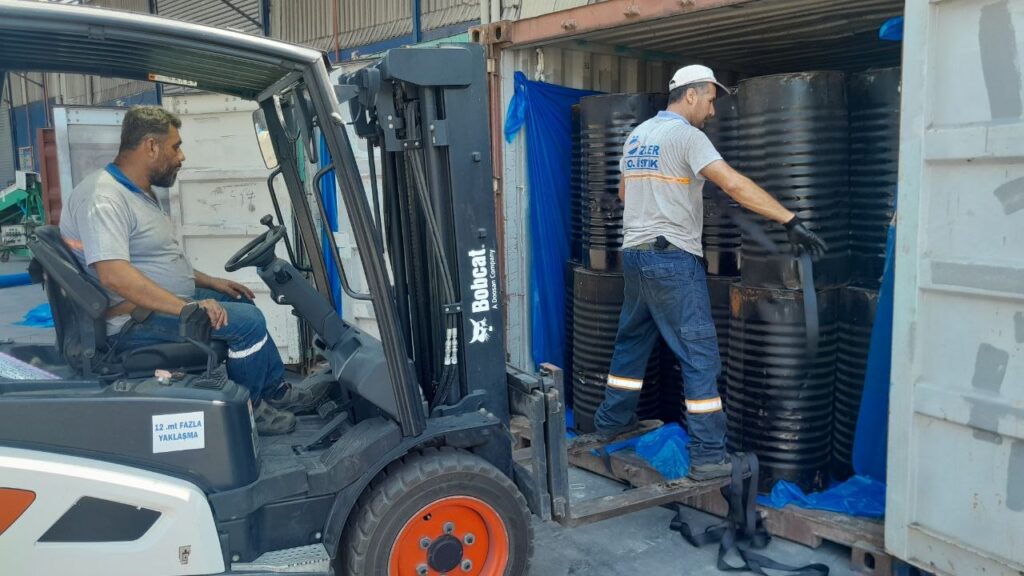
Photographic records can add considerable value. Images showing empty-container condition, stuffing progress, packaging labels, final loading arrangement, container number, and seal can become useful evidence when a dispute occurs. They also help commercial teams demonstrate actual export operations to future customers without disclosing confidential contract information.
Verified Gross Mass and other carrier or maritime requirements should be handled according to applicable procedures. Exporters and freight forwarders need accurate documentation rather than estimated weights copied from a quotation.
For a Kenya-bound cargo, unloading planning should happen before loading in Turkey. If the consignee needs forklifts, lifting equipment, labor, heating systems, or a particular package orientation, those constraints should influence the export plan. The best container loading method is the one designed backward from safe unloading and practical use at destination. That principle reduces damage, delay, and the expensive improvisation that occurs when cargo reaches Mombasa but nobody has properly planned how to handle it.
Shipping Documents, Customs Clearance, and Import Compliance
International bitumen trade depends heavily on paperwork. The physical cargo may be excellent, but incomplete or inconsistent documents can delay clearance, create bank discrepancies, complicate customs entries, and increase port-related costs. A disciplined exporter treats documentation as part of the product rather than an administrative chore completed at the last minute.
A typical shipment may involve a commercial invoice, packing list, bill of lading, certificate of origin, applicable product quality documents, insurance records where required by the agreed Incoterm, and other certificates requested by the buyer, bank, customs authority, port, carrier, or project. The exact requirements vary by transaction and can change, so Kenyan importers should confirm current obligations with their licensed customs agent and relevant authorities before shipment.
Consistency across the documents is crucial. Product description, quantity, gross and net weights, package counts, container numbers, consignee details, origin information, currency, Incoterm, and other commercial data should reconcile. When a letter of credit is involved, documentary precision becomes even more important because banks examine presentations against the credit terms. A harmless-looking mismatch can create a discrepancy and delay payment.
Classification also needs professional attention. Importers should use the appropriate customs classification for the actual product and transaction rather than copying an HS code from an unrelated internet listing. Tax treatment, import requirements, and regulatory controls depend on accurate classification and the rules applicable at the time of import.
Kenyan buyers should also confirm whether any pre-export conformity assessment, standards documentation, permits, or inspections apply to their specific bitumen cargo. Regulations can change, and requirements may vary according to product form, origin, project, and customs regime. Written confirmation from qualified local professionals is more dependable than an old shipment checklist.
For Aljabal Holding’s Turkey-to-Mombasa bitumen trade, document readiness can become a genuine competitive advantage. When buyers receive accurate drafts early enough to review them, errors can be corrected before vessel departure. That seemingly small habit can save far more money than aggressive negotiation over a few dollars in freight.
Managing Logistics, Storage, Handling, and Commercial Risk
International commodity transactions succeed when the parties manage the boring details that marketing pages rarely mention. Bitumen has specific handling characteristics, containers have strict operational deadlines, ships can experience schedule changes, ports can become congested, and construction projects rarely consume material at a perfectly predictable rate. A good supply plan creates room for these realities instead of assuming every step will occur exactly on schedule.
One of the first commercial decisions is the Incoterm. Whether the transaction uses an FOB, CFR, CIF, or another agreed structure affects cost allocation, risk transfer, freight responsibility, insurance obligations, and control over parts of the logistics chain. Buyers should use the current agreed Incoterms rules correctly and ensure the sales contract identifies the named port or place clearly. Using a trade term casually can lead to costly misunderstandings about who was responsible when something went wrong.
Shipping schedule risk also deserves attention. Estimated departure and arrival dates are not the same as guaranteed dates. Transshipment connections, vessel changes, congestion, weather, equipment shortages, and carrier operations can affect transit. Contractors with strict paving programs may protect themselves through safety stock or by placing orders before inventory reaches a critical level.
Storage is equally important. Packaged bitumen should be kept in conditions appropriate to the packaging and supplier recommendations, with protection against damage, contamination, uncontrolled heat, water exposure where relevant, and unsafe stacking. The buyer also needs a documented method for heating and feeding the binder into production equipment. Heating should follow technical and safety procedures rather than trial and error.
Commercial risk includes counterparty verification, payment security, quality claims, currency exposure, documentation, insurance, and dispute-resolution terms. New buyers and suppliers can reduce uncertainty through staged transactions, third-party inspection, clear contracts, appropriate payment instruments, and evidence of previous shipments.
For anyone sourcing bitumen 60/70 from Turkey to Kenya, the cheapest offer is only attractive if the cargo arrives usable and on time. Total risk-adjusted cost is a better metric. A slightly higher-priced supplier with consistent documentation, sensible loading, reliable communication, and traceable quality can easily become the less expensive choice once delays and operational disruptions are considered.
What Buyers Should Verify When Working With Aljabal Holding or Any Bitumen Exporter
A professional procurement process should verify the company, the product, and the transaction independently. This applies to Aljabal Holding just as it applies to any international supplier. A polished website, WhatsApp conversation, quotation, or photograph should never substitute for structured due diligence when significant money is at stake. Commodity fraud often works because buyers are rushed by unusually low prices or supposed supply shortages. Good procurement slows down exactly where verification matters.
The first task is establishing the seller’s legal identity. Buyers can request company registration details, contracting entity information, authorized signatory confirmation, banking information in the company’s name where appropriate, and commercial references that can be independently checked. Company names deserve careful scrutiny because similar or copied names can be used by unrelated parties.
Next comes product evidence. Ask for the bitumen 60/70 specification, recent representative laboratory reports, the inspection procedure proposed for the new shipment, packaging details, loading capacity, and clear photographs or videos where useful. A past certificate is supporting evidence of capability; it should not be treated as the final COA for an unproduced future cargo.
Shipment experience should be verified through redacted documentary evidence when available. A previous bill of lading, packing list, certificate of origin, inspection record, and loading photos can help establish that the supplier has handled comparable trade. Sensitive buyer details can be concealed. Prospective customers examining the claimed August 2026 Aljabal Holding shipment from Turkey to Mombasa can ask for appropriate supporting records rather than relying exclusively on an online article.
Commercial terms should then be examined carefully. Price basis, Incoterm, payment method, shipment window, document requirements, inspection rights, tolerance, claims procedure, arbitration or governing law, and responsibility for destination charges should all be clear before payment.
Perhaps the best question a buyer can ask is, “What evidence will I receive at each stage?” A dependable supplier should be able to explain the process from quotation through testing, loading, document issuance, shipment, and arrival. Trust in international trade is rarely created by one impressive promise. It is built from a chain of small facts that can be checked.
Conclusion
The reported Aljabal Holding export of bitumen 60/70 in 20 ft containers from Turkey to Mombasa, Kenya, in August 2026 illustrates a trade route with practical relevance for road contractors, asphalt producers, infrastructure companies, distributors, and commodity buyers serving Kenya and neighboring markets. The shipment format combines an established paving-binder grade with conventional container logistics, potentially giving buyers flexibility when bulk heated delivery is not the preferred procurement model.
The most important lesson, however, is that a credible bitumen supply story is built on documentation. An online page can introduce the company and describe its capabilities, but professional buyers eventually need evidence tied to the real cargo. Product specification, laboratory testing, packaging records, accurate container weights, commercial invoices, packing lists, certificates of origin, bills of lading, and where appropriate independent inspection form the backbone of a transparent transaction.
For Aljabal Holding, the August 2026 Mombasa shipment can become especially valuable as a commercial reference if publishable evidence is connected to the project profile. Redacted shipping documents, batch-specific quality information, dated loading images, or buyer-approved references can transform a basic marketing claim into a verifiable case study. Search engines benefit from that depth, but more importantly, procurement teams do too.
Kenyan buyers considering future bitumen 60/70 imports from Turkey should evaluate the full landed supply chain. Product price matters, yet so do packaging, ocean freight, destination charges, customs procedures, inland transport, unloading requirements, heating, storage, inspection, payment security, and schedule reliability. A shipment that is a few dollars cheaper at origin can become dramatically more expensive if poor planning leaves containers sitting at the port or causes an asphalt plant to run short of usable binder.
Bitumen may look like a simple commodity, but the supply chain behind it behaves more like a relay race. Every participant—producer, trader, laboratory, packer, forwarder, carrier, customs agent, transporter, and buyer—has to hand the cargo and documents to the next participant cleanly. When those handoffs are controlled, Turkey-to-Mombasa bitumen supply can become repeatable, traceable, and commercially dependable.
FAQ: What Is Bitumen 60/70?
Bitumen 60/70 is a penetration-grade paving bitumen commonly associated with asphalt and road construction applications where engineering specifications require that grade. The “60/70” designation comes from a penetration test performed under standardized laboratory conditions. It indicates a defined consistency range rather than meaning that the material contains 60% or 70% of a particular substance.
The grade designation helps engineers differentiate binders according to consistency. Yet penetration is only one part of product evaluation. Depending on the governing standard or project specification, buyers may also need information about softening point, ductility, flash point, solubility, viscosity, heating behavior, or other characteristics. The exact test package should be agreed before purchasing.
A buyer should therefore request a formal technical specification and a shipment-specific or batch-related Certificate of Analysis. If the material is being purchased for a government road contract or another tightly controlled project, the engineer may specify a particular test method or independent laboratory. Those requirements should be communicated to the supplier early enough to incorporate them into production, sampling, and inspection.
Bitumen 60/70 is often discussed as though it were a universal recipe, but actual performance in pavement depends on much more than the binder grade. Aggregate type, mix design, binder content, temperatures, plant control, compaction, drainage, pavement structure, traffic, and climate all influence results. That is why technical approval normally belongs with qualified project engineers.
For an importer considering Aljabal Holding bitumen 60/70 from Turkey, the right purchasing question is not simply, “Do you have 60/70?” A better question is, “Can you supply 60/70 that conforms to my specified standard, and what test evidence will accompany the cargo?” That small change in wording moves the conversation from commodity marketing toward proper engineering procurement.
FAQ: Why Ship Bitumen to Mombasa in 20 Ft Containers?
Twenty-foot containers are useful for bitumen because the product is dense. In many commodity shipments, a larger 40 ft container allows the exporter to increase cargo significantly because volume is the main constraint. With dense products, maximum allowable weight often becomes the limiting factor much sooner. That makes a 20 ft container a practical format for balancing payload, structural limits, terminal handling, ocean transportation, and inland trucking.
Containerization also gives buyers access to regular liner-shipping networks without requiring the specialized infrastructure associated with bulk bitumen vessels and heated storage terminals. This can suit companies purchasing manageable parcel sizes, contractors supplying specific projects, distributors building inventory gradually, or customers located in markets where bulk receiving infrastructure is limited.
The model still has costs that buyers need to understand. Packaging material, container stuffing, unloading labor, heating, packaging disposal where applicable, destination charges, demurrage or detention exposure, and empty-container return can affect the final cost per tonne. A supplier should therefore help customers compare the total landed economics of the shipment rather than presenting ocean freight in isolation.
Mombasa provides a logical maritime entry point for Kenyan cargo, but importers need to coordinate local operations before arrival. Customs documentation should be prepared, transporters arranged, unloading equipment confirmed, storage space available, and the container free-time conditions understood. Failing to plan these steps can quickly erase savings negotiated at origin.
For buyers evaluating a shipment similar to Aljabal Holding’s reported August 2026 movement, requesting a sample packing plan is useful. It should show the package type, approximate units per container, expected net cargo weight, gross weight controls, unloading method, and any special handling instructions.
Containerized bitumen is therefore not automatically better than bulk shipment. It is simply a different supply model. When the buyer’s consumption pattern and infrastructure suit that model, 20 ft containers can offer valuable flexibility and easier access to international bitumen supply chains.
FAQ: What Documents Should Accompany Bitumen Exported from Turkey to Kenya?
The exact document package depends on the commercial terms, Kenyan import requirements, product classification, payment method, carrier, and project conditions. A normal international transaction commonly begins with a commercial invoice and packing list. The invoice records the sale and commercial value, while the packing list describes how the cargo has been packed and typically identifies quantities, package counts, weights, and related shipment information.
The bill of lading is another fundamental document in ocean transportation. It records important information relating to the cargo, shipper, consignee or order party, vessel movement, container numbers, loading location, destination, and transportation contract. The precise legal role of the bill depends on its form and shipment structure, so companies should manage original or electronic bills according to their contractual arrangements.
A certificate of origin may be required to establish the declared country of origin. Buyers should remember that country of shipment and country of origin can differ. When origin is commercially or regulatorily important, it should be verified rather than inferred from the port where the container was loaded.
Technical documents may include a certificate of analysis, product specification, inspection certificate, safety documentation, or additional quality records required by the project. Depending on Kenyan requirements applicable at the time, other conformity or import documentation may also be necessary. Because regulatory rules can change, importers should confirm current requirements with relevant Kenyan authorities and qualified customs professionals before cargo departs Turkey.
Payment mechanisms can add another layer. A letter of credit, for example, may demand specific wording, dates, originals, certifications, or presentation deadlines. Documents that satisfy customs do not automatically satisfy a bank.
For any future Aljabal Holding shipment to Mombasa, document drafts should ideally be exchanged before final issuance. This gives buyer, seller, freight forwarder, and customs representatives an opportunity to catch errors early. In international trade, accurate paperwork is not decoration around the shipment. It is the map that allows the physical cargo to move through the commercial and regulatory system.
FAQ: How Should Imported Bitumen 60/70 Be Stored and Handled?
Safe bitumen handling begins with recognizing that the material will eventually need controlled heating for many asphalt-production processes. Personnel should follow the product’s applicable safety information, supplier instructions, plant procedures, and local occupational requirements. Improvised heating practices can create burns, fire hazards, fumes, product degradation, equipment damage, and contamination. Qualified operators and appropriate equipment are essential.
When bitumen arrives in packaged containerized form, the first concern is safe unloading. The consignee should know the package type and unit weight before opening the container so that suitable equipment and labor are available. Heavy cargo can create serious hazards if workers attempt to move packages manually or use lifting equipment that is not rated for the load.
Storage conditions depend on the packaging system. Packages should generally be protected from damage, contamination, and conditions that could compromise their integrity. Storage surfaces should be stable and suitable for the load. Stacking arrangements must follow supplier recommendations and workplace safety rules. The buyer also needs an inventory system so older stock and individual batches remain identifiable.
Heating should be controlled rather than rushed. Bitumen exposed to unnecessarily high temperatures or excessive heating duration may undergo changes that affect handling and potentially performance. Asphalt plants normally use established procedures for bringing binder into operating condition. The specific temperature should come from technical requirements, equipment guidance, and the relevant product information rather than a generic internet number.
Environmental controls matter too. Sites should have procedures for spills, damaged packages, waste material, and contaminated surfaces. Appropriate personal protective equipment, restricted access, training, and emergency arrangements help reduce risk.
Before buying from Turkey, a Kenyan customer can ask the exporter for unloading and handling guidance specific to the proposed packaging. That question is often overlooked during price negotiation. Yet once the container arrives in Mombasa or at an inland facility, practical handling determines how quickly the material can enter production. Good procurement plans for the cargo’s entire life cycle—from factory packing to the moment the binder reaches the asphalt mixer.
FAQ: How Can a Kenyan Buyer Evaluate a Bitumen Supplier Before Ordering?
Supplier evaluation should begin long before money changes hands. The first layer is corporate verification: confirm the legal contracting entity, registration details, authorized representatives, business address, communication channels, and banking information. Independently verify critical information rather than relying exclusively on documents sent through messaging applications. Where appropriate, obtain trade references and check whether those references can genuinely confirm completed business.
The second layer is technical capability. Ask the supplier for the proposed bitumen 60/70 specification, sample quality documentation, packaging options, container loading plan, inspection process, expected production or supply lead time, and procedures for handling claims. An exporter that can answer technical questions consistently is easier to evaluate than one whose entire sales pitch depends on price.
Next, examine evidence of shipment capability. For Aljabal Holding, a buyer interested in the claimed August 2026 export from Turkey to Mombasa, Kenya, could request commercially appropriate evidence such as redacted bills of lading, packing records, loading photographs, or certificates connected to previous shipments. Sensitive customer information does not need to be publicly disclosed for the underlying movement to be demonstrated.
Payment risk must also be managed. Buyers should be cautious when bank details suddenly change, payments are requested to unrelated entities, or extreme urgency is used to discourage verification. The right payment structure depends on transaction size, relationship history, jurisdiction, financing arrangements, and each party’s risk tolerance. Banks and trade-finance professionals can assist with suitable mechanisms.
A first transaction may justify independent inspection before shipment. Inspectors can potentially verify quantity, packaging, container loading, sampling, or other agreed matters. The scope must be stated clearly because an inspection certificate only confirms what the inspector was actually engaged to examine.
Finally, compare suppliers on total value rather than headline price. Product conformity, documentation, communication, loading quality, shipping experience, claims handling, and delivery reliability all carry economic value. A procurement team that verifies these elements is far better positioned to build a repeatable Turkey-to-Kenya bitumen supply relationship instead of gambling on a single attractive quotation.