Introduction: Why This Shipment Matters
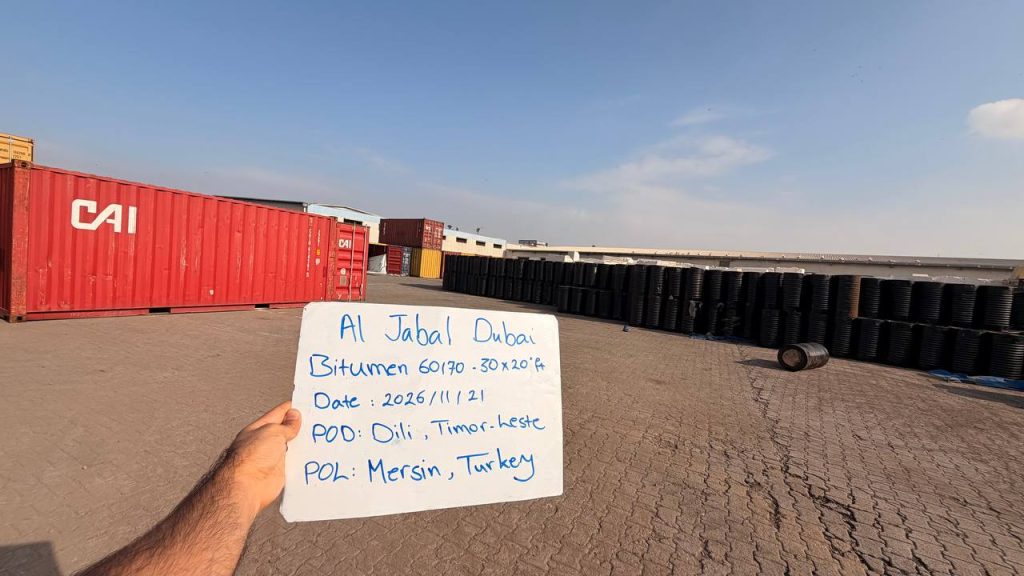
Moving bitumen halfway across the world is not like shipping T-shirts. It’s heavy, it’s sensitive to temperature, and it sits at the heart of road construction. So when a consignment of 30 x 20ft containers of Bitumen 60/70 leaves Mersin port in Turkey bound for Dili port in Timor-Leste, it’s worth a closer look.
This report walks through that November 2026 export handled by Aljabal Holding. We’ll look at the product, the packaging, the route, the ports on both ends, and the lessons that any trader, contractor or procurement officer can take away. Think of it as a guided tour of one shipment, from the factory gate to the quayside.
One note on scope. This article describes the shipment as outlined in the topic brief, and explains the surrounding trade context in general terms. Exact contract values, vessel names and delivery dates should be confirmed directly with the company.
About Aljabal Holding and Its Role in Bitumen Trade
Company Focus and Market Position
Aljabal Holding operates as a trading and supply business in petroleum-related and industrial commodities, with bitumen being a core product in this kind of portfolio. Companies like this act as the bridge between refineries and end users. They source material, arrange packaging, handle shipping, and make sure the paperwork matches the cargo.
Why does that matter? Because a road contractor in a small island nation can’t just phone a Turkish refinery and expect a smooth delivery. A trading house absorbs that complexity.
Why Turkey Is a Smart Sourcing Base
Turkey sits at a crossroads between Europe, the Middle East and Asia. Its refineries produce paving-grade bitumen, and its Mediterranean ports give direct access to the Suez Canal. That location is like having a front-row seat at the world’s busiest shipping intersection. Add competitive pricing and established export procedures, and you can see why buyers in distant markets keep looking at Aljabal bitumen.
Understanding Bitumen 60/70
What the 60/70 Grade Means
Bitumen 60/70 is a penetration grade. The numbers describe how deep a standard needle sinks into the material under controlled test conditions. A reading between 60 and 70 (in tenths of a millimeter) tells you the bitumen is moderately hard. It’s the “Goldilocks” grade for many climates: not too soft in the heat, not too brittle in cooler weather.
Typical Technical Specifications
Exact values depend on the refinery and the standard used, but 60/70 bitumen generally shows these characteristics:
- Penetration at 25°C: 60 to 70 dmm
- Softening point: roughly 46 to 56°C
- Ductility at 25°C: typically 100 cm minimum
- Flash point: commonly 230°C or higher
- Solubility in trichloroethylene: very high, usually 99 percent or above
Buyers should always request the refinery’s certificate of analysis to confirm the numbers for their specific batch.
Where 60/70 Is Used Most
This grade is a workhorse. You’ll find it in asphalt for highways, urban roads, airport runways, car parks and industrial yards. In tropical and warm climates like Timor-Leste’s, 60/70 is a popular choice because it balances durability with workability.
Shipment Snapshot: 30 x 20ft Containers
Packaging Options: Drums, Bitubags and Flexitanks
Bitumen doesn’t pour like water, so the packaging decision shapes the entire operation. For containerized shipments there are three common approaches:
- Steel drums: Familiar, sturdy and easy to handle with forklifts. They’re also easy to inspect and stack. The drawback is extra weight and the need to dispose of or recycle empty drums.
- Bitubags: Specialized bags placed inside containers. They cut packaging waste and let the bitumen be melted out on arrival.
- Flexitanks (heated or insulated): Large flexible liners that carry bulk bitumen inside a container, often paired with heating arrangements for discharge.
The brief for this report specifies 30 x 20ft containers, and the packaging choice on any such shipment is normally agreed between seller, buyer and carrier before loading.
Estimated Volume and Loading Logic
A 20ft container loaded with bitumen usually carries somewhere in the range of 20 to 25 metric tons, depending on packaging and weight limits. Multiply that by 30 containers and you’re looking at roughly 600 to 750 metric tons in total. That’s a meaningful quantity for a market the size of Timor-Leste, enough to support significant road works.
Why 20ft containers rather than 40ft? Weight. Bitumen is dense, so a 20ft box reaches its legal weight limit long before it runs out of space. It’s like filling a small suitcase with books: you’ll hit the airline’s weight limit before you hit the zipper.
Mersin Port: The Starting Line
Why Mersin Works for Bitumen Exports
Mersin is one of Turkey’s largest container gateways on the Mediterranean. It has deep-water berths, frequent liner calls and strong connections to the industrial regions of southern Turkey. For a shipper, that means more sailing options, easier container availability and a well-oiled customs process.
Mersin’s position also keeps inland trucking distances reasonable from refinery areas in the south and southeast of the country.
Documentation and Loading Procedures
Before a single drum or bag goes into a container, the paperwork has to be ready. A typical export file includes:
- Commercial invoice and packing list
- Certificate of origin
- Certificate of analysis for the bitumen batch
- Safety Data Sheet (SDS) for dangerous goods handling
- Bill of lading
- Export customs declaration
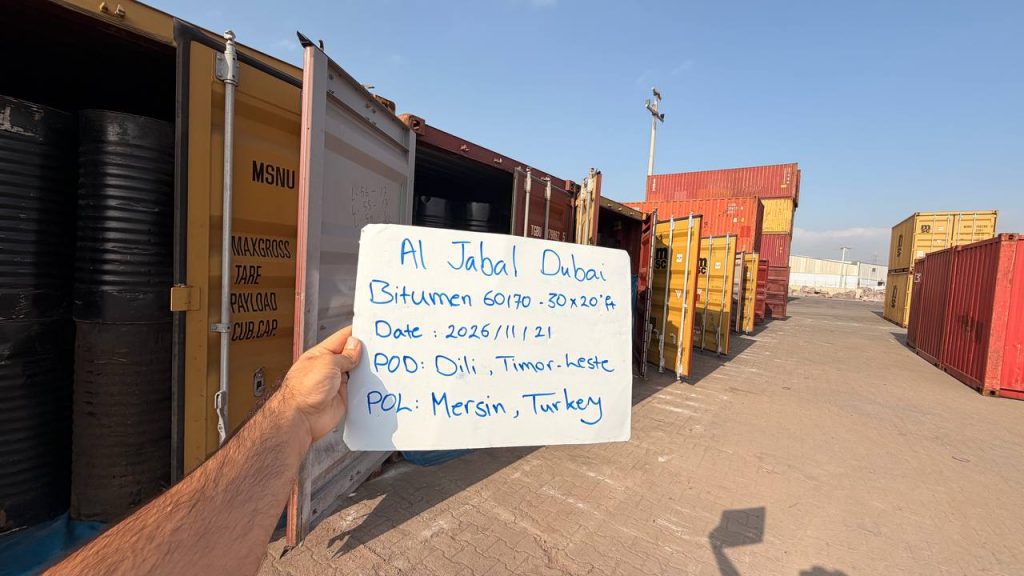
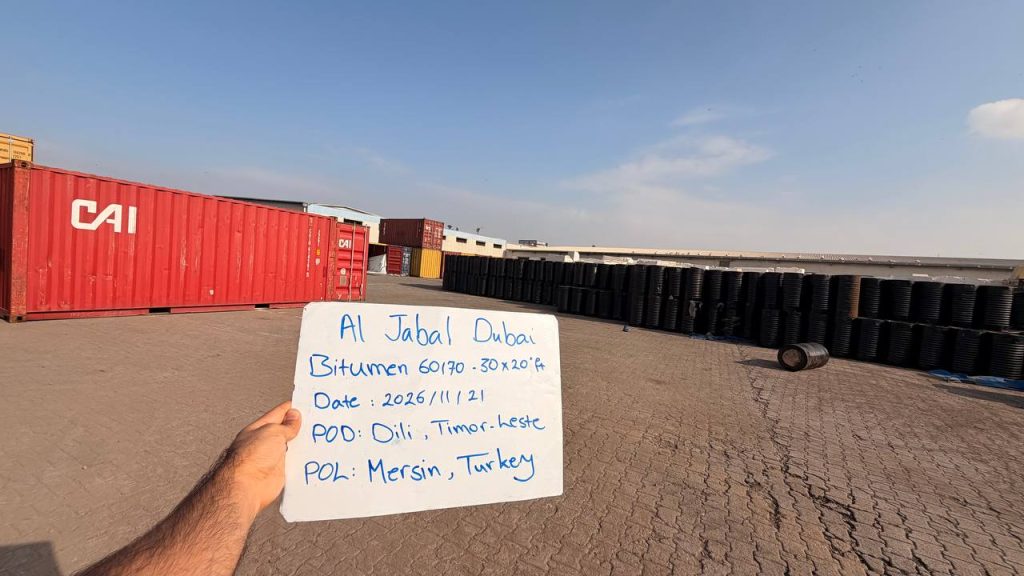
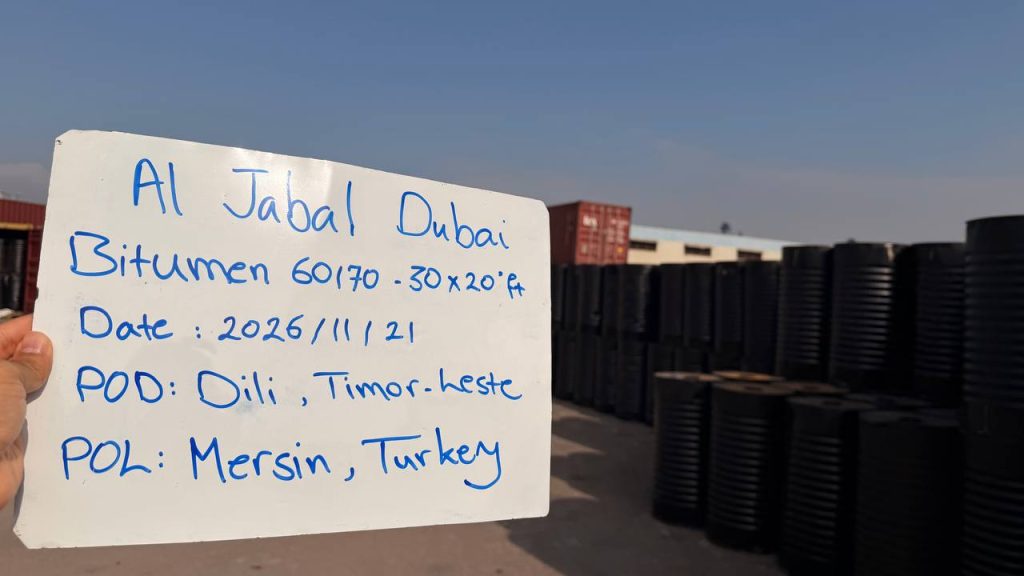
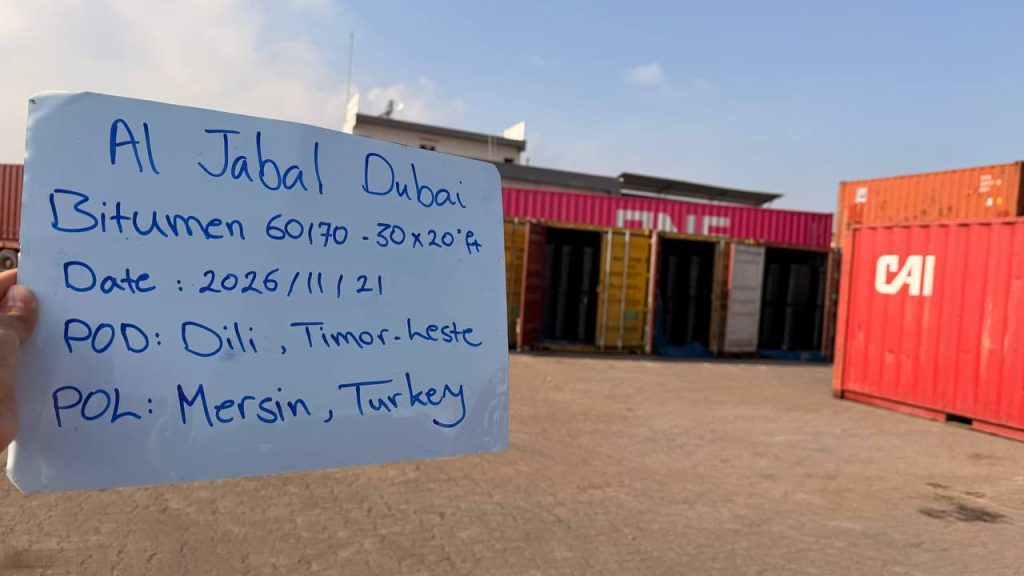
Loading is supervised closely. Containers are inspected for cleanliness and structural soundness, and the cargo is secured so nothing shifts during rough seas.
The Sea Route from Mersin to Dili
Transit Path and Transshipment
There’s rarely a direct sailing between Mersin and Dili. The usual path runs east through the Suez Canal, down the Red Sea, across the Indian Ocean, and then through a major Asian hub such as Singapore. From there, a feeder vessel carries the boxes to Timor-Leste. Each handoff is a point where delays can creep in, so careful scheduling matters.
Estimated Transit Time
For this kind of multi-leg journey, total transit often lands in the range of five to seven weeks door to door, depending on connections, canal conditions and weather. Shipments that leave Turkey in November can face seasonal monsoon-related swell in parts of the route, so buffer time is wise.
Dili Port and Timor-Leste Market Demand
Port Handling and Inland Delivery
Timor-Leste’s container trade has been modernizing, with the newer Tibar Bay port near Dili taking on a major share of container handling. For importers, this means better equipment and more predictable discharge than in the past. Once cleared, the containers move by truck to storage yards or directly to asphalt plants and job sites.
Infrastructure Needs Driving Imports
Timor-Leste has no domestic refinery producing paving bitumen at scale, so road projects depend on imports. Ongoing investment in highways, rural connectivity and urban streets keeps demand alive. Roads are the arteries of a country. Without them, markets, schools and clinics all feel the strain, and bitumen is the glue that holds those arteries together.
Challenges Faced and How They Were Managed
Heat, Handling and Safety
Bitumen is stable at ambient temperature, but it must be heated for pumping and mixing. That brings real hazards: burns, fumes and fire risk. Proper labeling, trained crews and compliant containers are non-negotiable. In the tropics, containers sitting in yard heat can soften the product, so ventilation and sensible stacking help.
Customs, Compliance and Paperwork
A single mismatch between the invoice, the packing list and the bill of lading can freeze a container at the gate. The fix is boring but powerful: double-check every document before it leaves the office. Compliance with dangerous goods rules at both the origin and destination ports also needs attention, since bitumen can fall under special handling requirements depending on how it’s packed and transported.
Quality Control and Documentation
Quality control isn’t a final step; it runs through the whole chain. Good practice for a shipment like this includes:
- Pre-loading sampling of the batch with lab testing
- Independent inspection by a third-party surveyor, if the buyer requests it
- Sealed containers with recorded seal numbers
- Photographic records of loading and stuffing
- Retained samples kept in case of later disputes
These steps protect both sides. The buyer gets proof of what they ordered, and the seller has evidence of what was shipped.
Key Lessons from the November 2026 Shipment
What can other exporters and importers learn from this kind of trade lane?
- Plan packaging early. The choice between drums, bitubags and flexitanks affects cost, handling and waste.
- Build time buffers. Transshipment routes are unpredictable, so don’t promise the road crew a start date that leaves zero margin.
- Respect the paperwork. Clean documents are the cheapest insurance you’ll ever buy.
- Check the weather window. Delivery timing relative to local rainy and dry seasons can decide whether paving crews can actually use the material on arrival.
- Work with experienced partners. Freight forwarders and agents who know both ends of the route save headaches.
Conclusion
The export of 30 x 20ft containers of Bitumen 60/70 from Mersin to Dili in November 2026 is a neat example of how global trade connects very different places. A Turkish Mediterranean port, the Suez Canal, an Asian transshipment hub and a Timor-Leste quay all play a part, and Aljabal Holding sits in the middle, coordinating the pieces. For buyers, the takeaway is simple: clear specifications, reliable packaging, solid documentation and realistic timelines turn a complicated journey into a predictable one. And for the roads that eventually get paved with this material? That’s where the story becomes visible to everyone.
FAQs
1. What does Bitumen 60/70 mean?
It refers to a penetration grade, where a standard needle penetrates the bitumen between 60 and 70 tenths of a millimeter under test conditions. It indicates medium hardness, which suits many road-paving climates.
2. How much bitumen fits in a 20ft container?
Typically around 20 to 25 metric tons, depending on the packaging method and weight regulations. For 30 containers, that suggests roughly 600 to 750 metric tons overall.
3. Why is bitumen shipped in 20ft containers instead of 40ft?
Bitumen is very dense. A 20ft container reaches its weight limit before its space is used up, so a 40ft box offers no real advantage.
4. How long does shipping from Mersin to Dili usually take?
Because the route usually involves the Suez Canal and a transshipment hub in Asia, expect roughly five to seven weeks, with variations caused by schedules and weather.
5. What documents are needed to export bitumen from Turkey?
Common documents include the commercial invoice, packing list, certificate of origin, certificate of analysis, safety data sheet, bill of lading and export customs declaration.