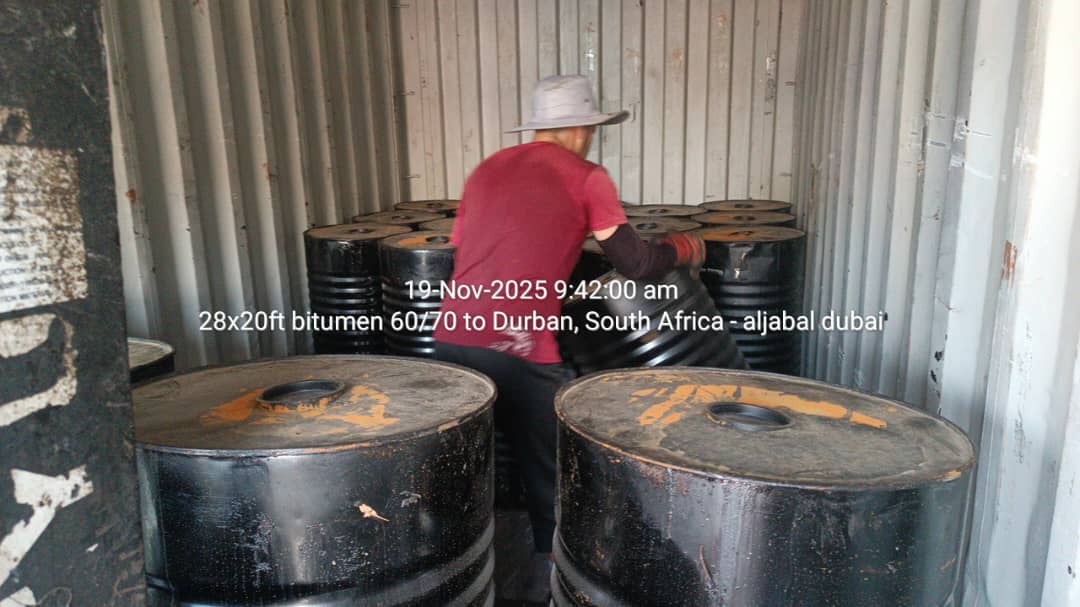
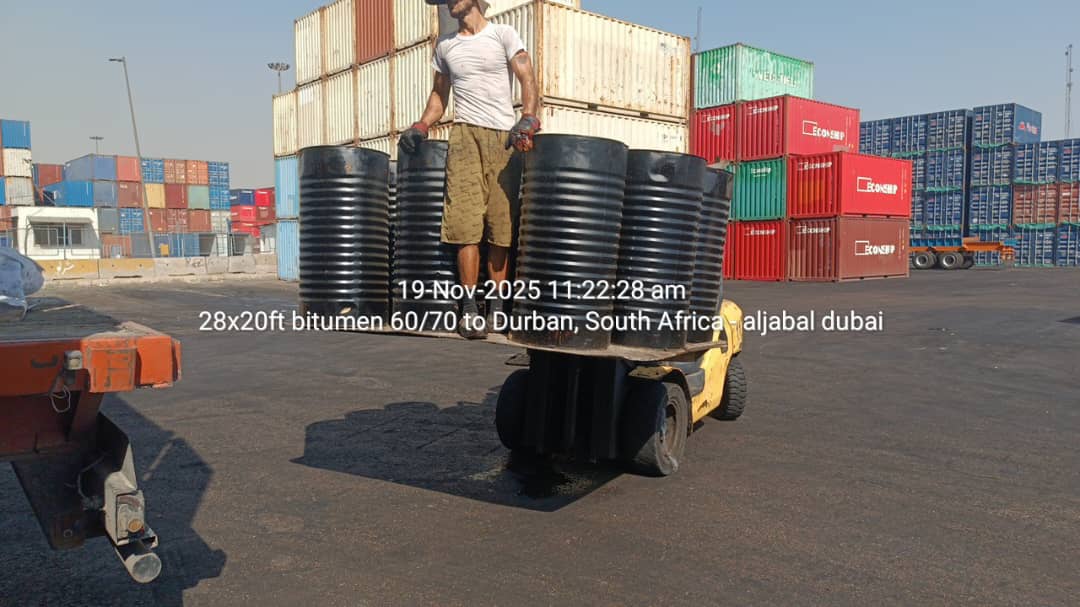
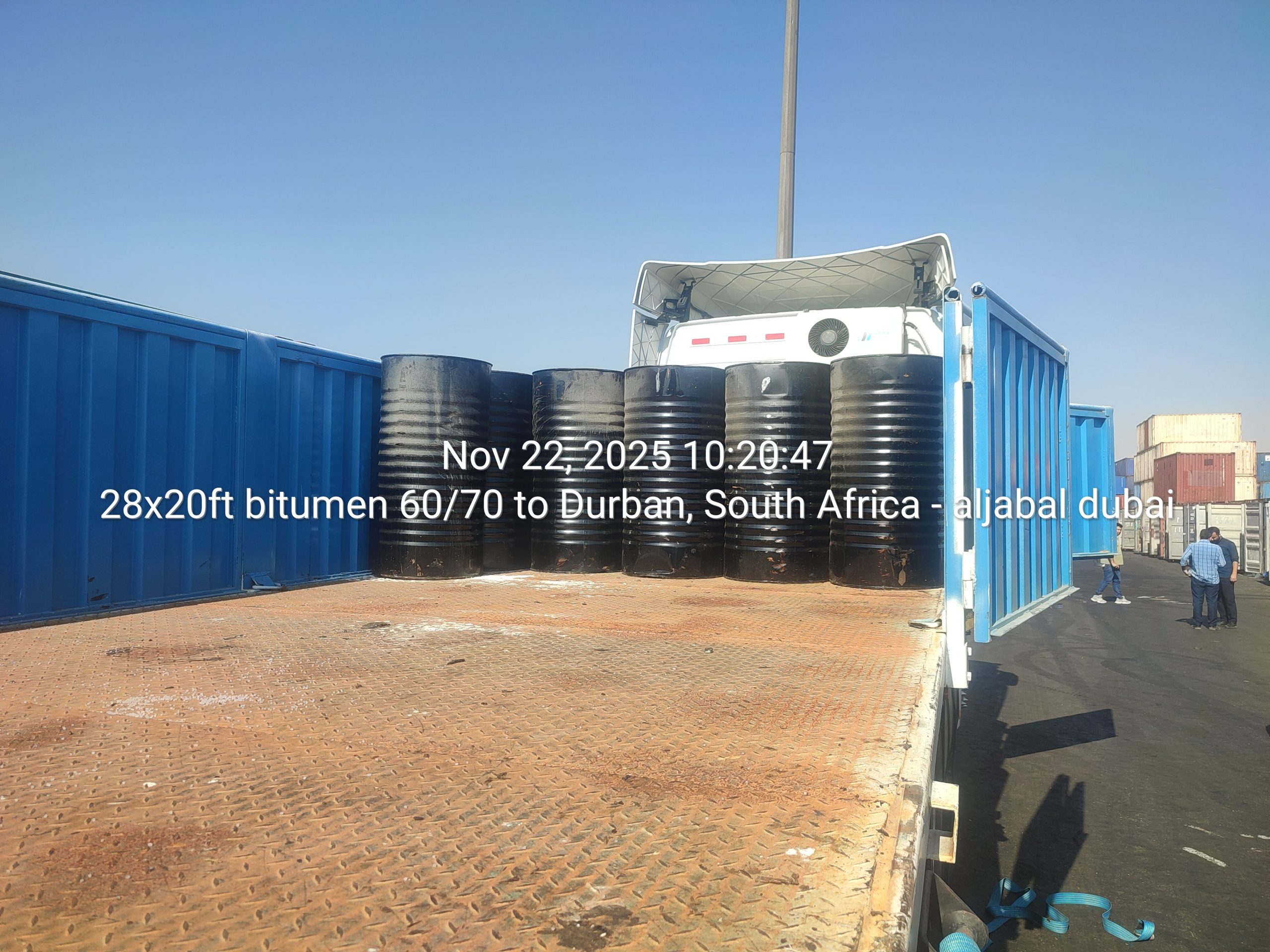
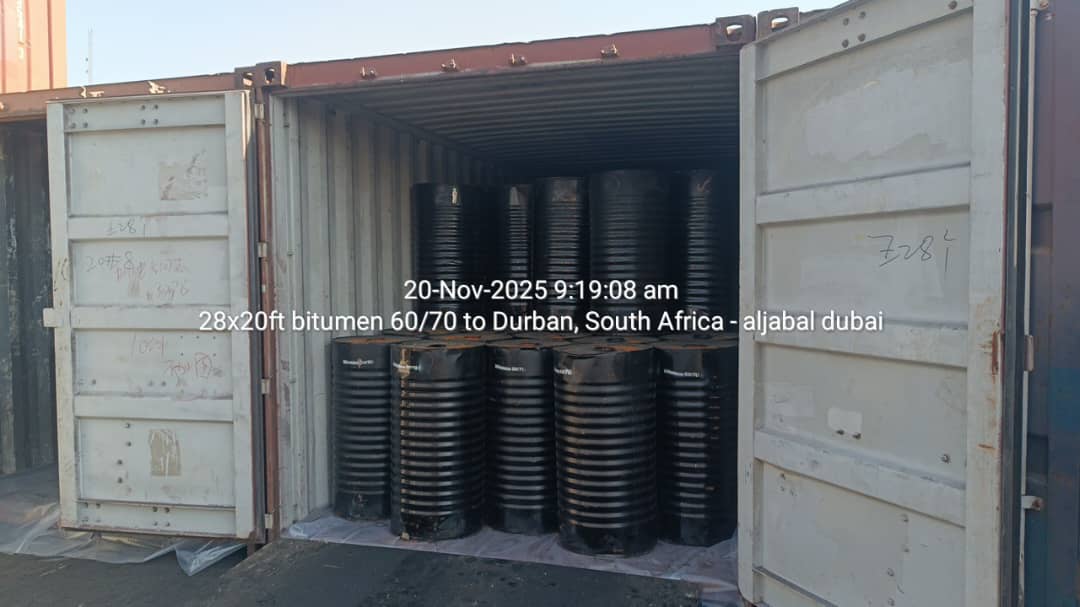
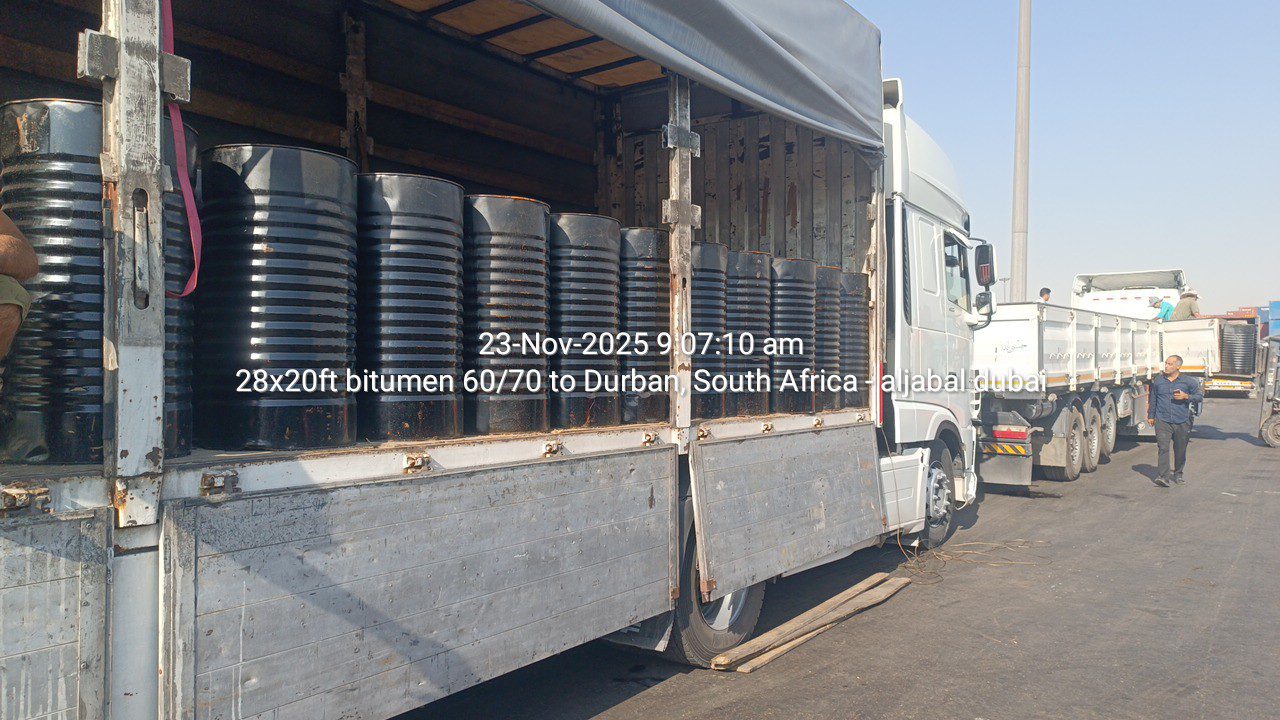
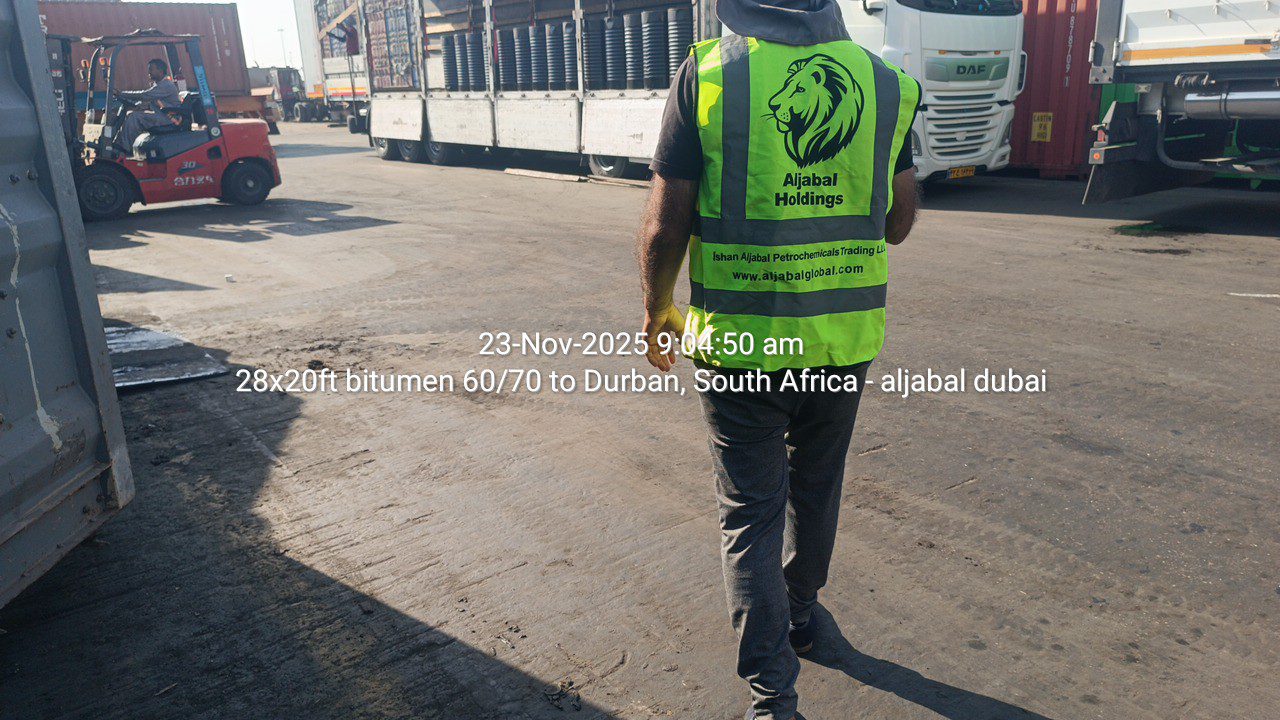
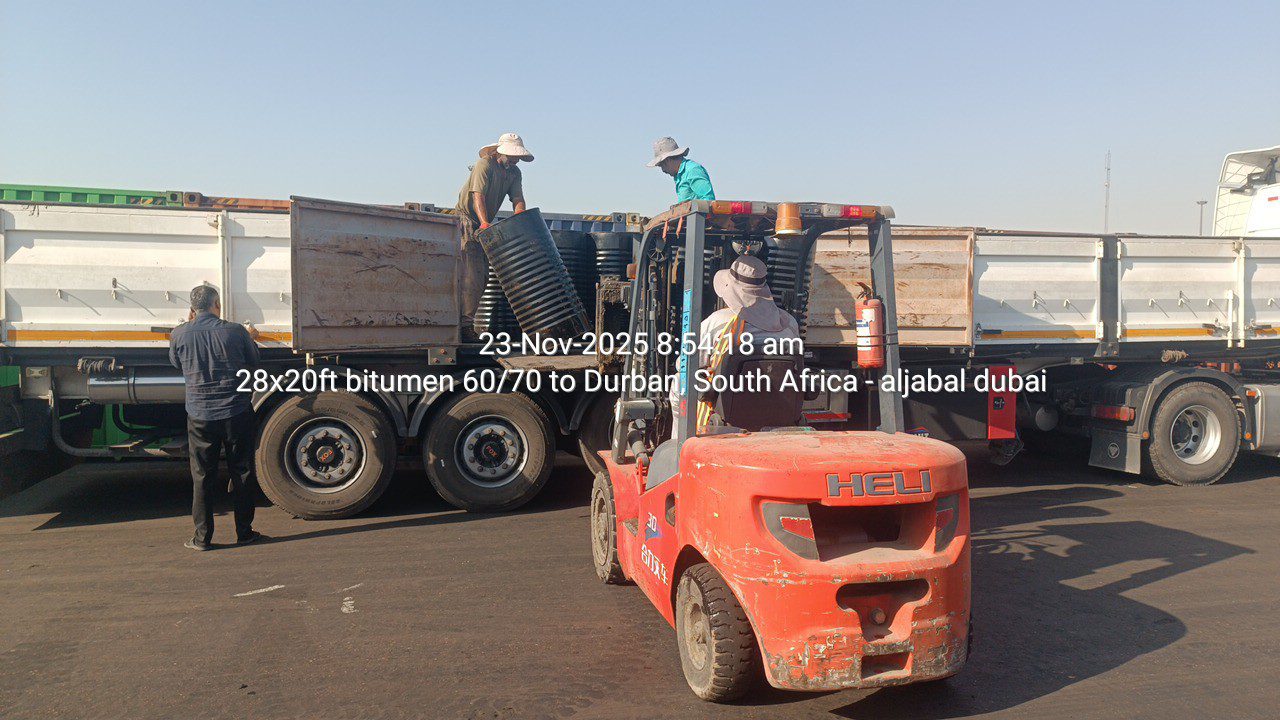
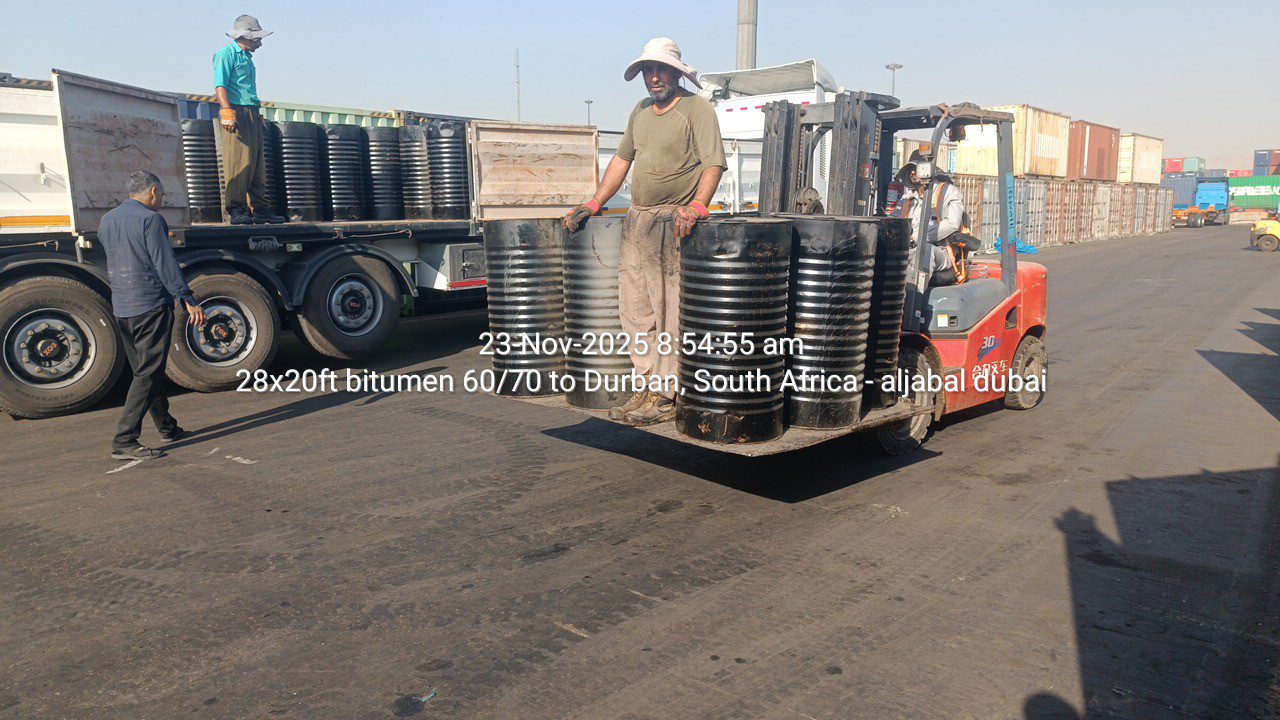
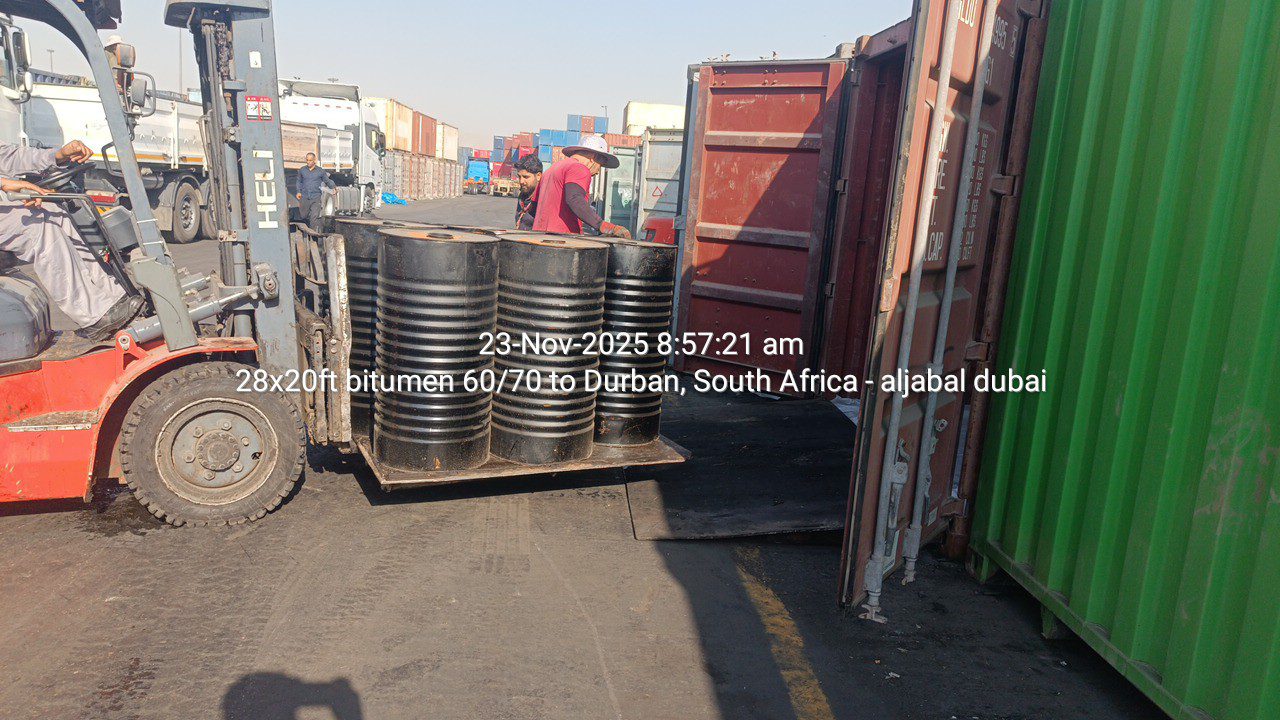
Exporting bitumen may sound like a straightforward supply transaction, but when you look closer, it’s a key driver in building nations—especially fast-growing ones like South Africa. In November 2025, AlJabal Holding successfully exported 28 units of 20-foot containers filled with Bitumen 60/70 to Durban, South Africa. This shipment wasn’t just another delivery; it represented progress, collaboration, and the growing international footprint of AlJabal Holding.
So, let’s break down this significant export operation and explore how it impacts both markets.
This report highlights the planning, technical specifications, shipping processes, and strategic importance of the bitumen shipment. It covers everything from quality checks to logistics challenges—giving a full picture of the November 2025 export operation.
Bitumen is the backbone of road construction and waterproofing. With Africa rapidly urbanizing, demand for quality bitumen has skyrocketed. South Africa, especially, has been actively upgrading highways, urban roads, and industrial zones—making bitumen a vital material for national development.
AlJabal Holding is a globally recognized supplier of petroleum-based products, specializing in bitumen, lubricants, and petrochemicals. With years of industry experience, the company has steadily expanded its reach into African markets.
What sets AlJabal apart is its end-to-end export capability—from sourcing to shipping. The company ensures that each batch of bitumen meets international standards before it travels across continents.
Bitumen 60/70 refers to a penetration-grade material with a penetration value between 60 and 70 mm. It is known for:
This grade is widely used in:
South Africa’s climate, which oscillates between warm summers and moderate winters, requires a bitumen grade that can withstand temperature fluctuations. Bitumen 60/70 fits perfectly.
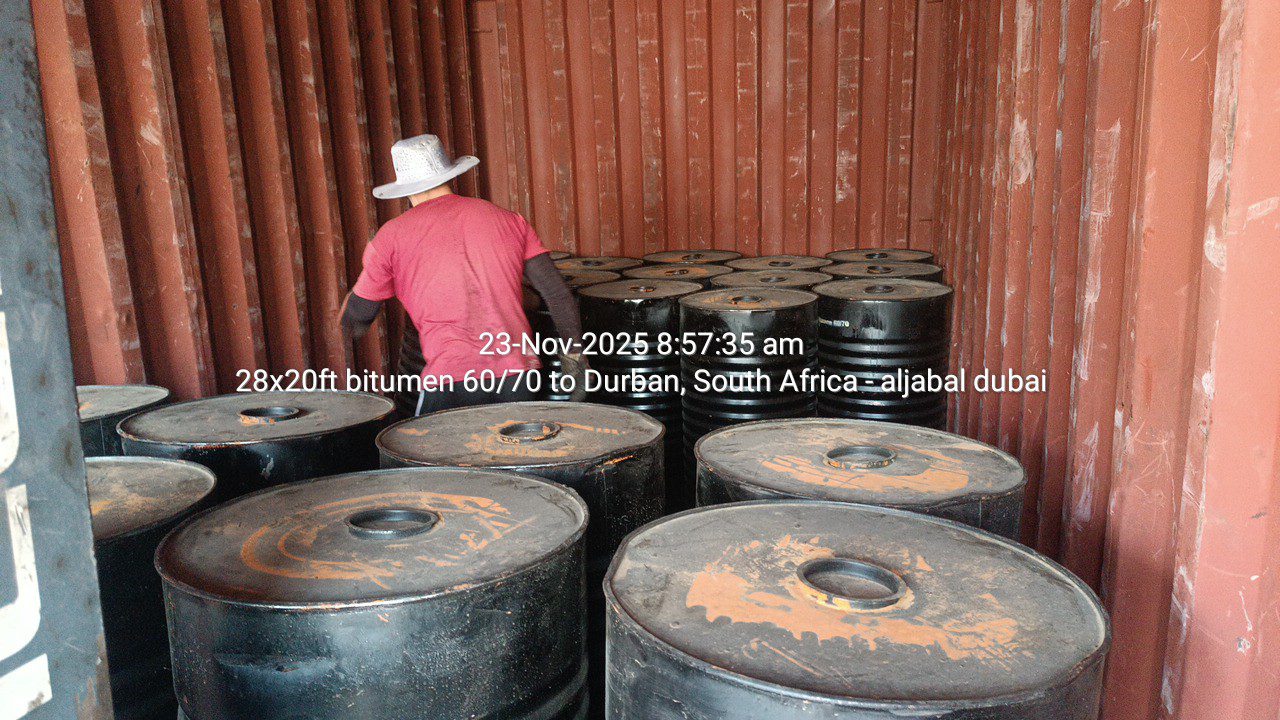
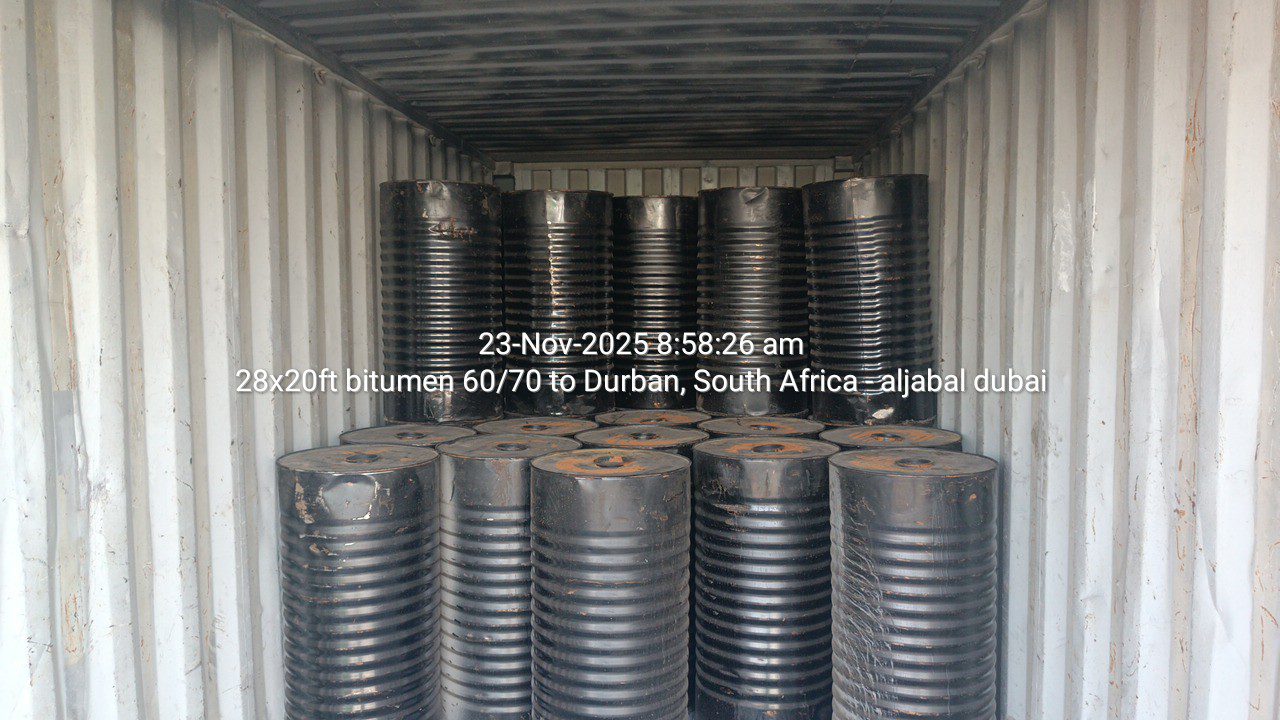
The shipment included 28 containers, each a 20-foot unit, packed with high-quality Bitumen 60/70 in approved export packaging. Each container carried approximately 26–28 metric tons, depending on load limits.
Before dispatch:
Every step adhered to:
The shipment traveled from the UAE to South Africa via sea freight. Durban’s strategic location on the southeast coast makes it the busiest port in Africa.
AlJabal Holding worked closely with trusted freight agencies to:
Transit time typically ranges between 14–18 days. Bitumen containers require:
Durban and surrounding regions are undergoing rapid development—new highways, industrial zones, and logistics hubs.
Government and private contractors rely heavily on imported bitumen for:
Durban offers:
Timely supply ensures road contractors can meet project deadlines without delays caused by material shortages.
This export enhances UAE–South Africa trade ties, paving the way for more petrochemical exports.
AlJabal’s consistent quality gives South African importers confidence in long-term collaboration.
This shipment boosts regional trade volumes and contributes to the economic synergy between both countries.
With better roads comes better mobility—stimulating economic activity, tourism, and trade.
Reliable supply builds trust, encouraging future contracts and expanded partnerships.
The global oil market saw volatility in 2025, impacting bitumen production costs.
Container shortages and port congestion posed occasional challenges.
Exporting petrochemical products requires stringent paperwork, inspections, and certifications.
Real-time container tracking ensured transparency and minimized risks.
Every batch underwent multi-stage testing to guarantee consistency.
Close collaboration helped avoid delays and ensured compliance with maritime regulations.
AlJabal plans to increase supply to neighboring countries such as Mozambique, Botswana, and Namibia.
This shipment is part of a larger strategy to deepen commercial ties across energy and construction sectors.
The company is exploring:
The export of 28×20 ft containers of Bitumen 60/70 to Durban in November 2025 marks a significant milestone for AlJabal Holding. It showcases the company’s ability to meet rising African infrastructure demands while maintaining impeccable standards in logistics, quality, and service. As South Africa continues advancing its development goals, such shipments will play a vital role in strengthening roads, industries, and international partnerships.
1. Why is Bitumen 60/70 commonly used in South Africa?
Because its penetration grade matches the climatic and structural requirements for stable, long-lasting roads.
2. How many containers were shipped in this operation?
A total of 28 twenty-foot containers were exported.
3. What is the typical weight of bitumen in a 20-ft container?
Approximately 26–28 metric tons, depending on safety limits.
4. Why is Durban a preferred port for such exports?
It’s Africa’s busiest port with advanced cargo-handling facilities.
5. Does AlJabal Holding plan to expand bitumen exports to Africa?
Yes, the company is gearing up to serve more countries across the continent.
This website uses cookies.